
Phone Verification Services: How to Check Number Status Before Dialing
Yes, specialized phone verification services can determine if a number is active, inactive, or flagged for legal risk before you dial. These tools use carrier data and proprietary databases to validate line status and compliance risks. This guide covers how verification works, the role of HLR lookups, line status checking, and number validation tools. It also explains how TCPA Litigator List integrates these checks with legal risk suppression to protect your business.
Phone Verification Services
Phone verification is the process of confirming that a telephone number is active, valid, and safe to contact. For businesses, this goes beyond simple connectivity. It involves checking the line type (mobile, landline, or VoIP) and assessing compliance risks. A standard verification service might tell you a number is active, but it may not tell you if the owner is a professional litigator. This distinction is critical for telemarketing and outbound sales teams.
The Difference Between Verification and Suppression
Many businesses confuse number verification with legal suppression. Verification confirms technical status. Suppression removes high-risk numbers from your dialing list. TCPA Litigator List focuses on the latter by providing a database of known litigators and demand letter senders. While a basic tool might say a number is active, our platform tells you if that active number belongs to someone who has sued businesses for TCPA violations in the past.
Why Technical Verification Is Not Enough
An active number is not always a safe number. In the context of the Telephone Consumer Protection Act (TCPA), the risk lies in the identity of the person behind the number. Professional litigators often use specific phone numbers to file lawsuits. If your dialer hits one of these numbers, you face potential statutory damages. Therefore, a robust compliance strategy requires both technical verification and legal risk screening.
HLR Lookups
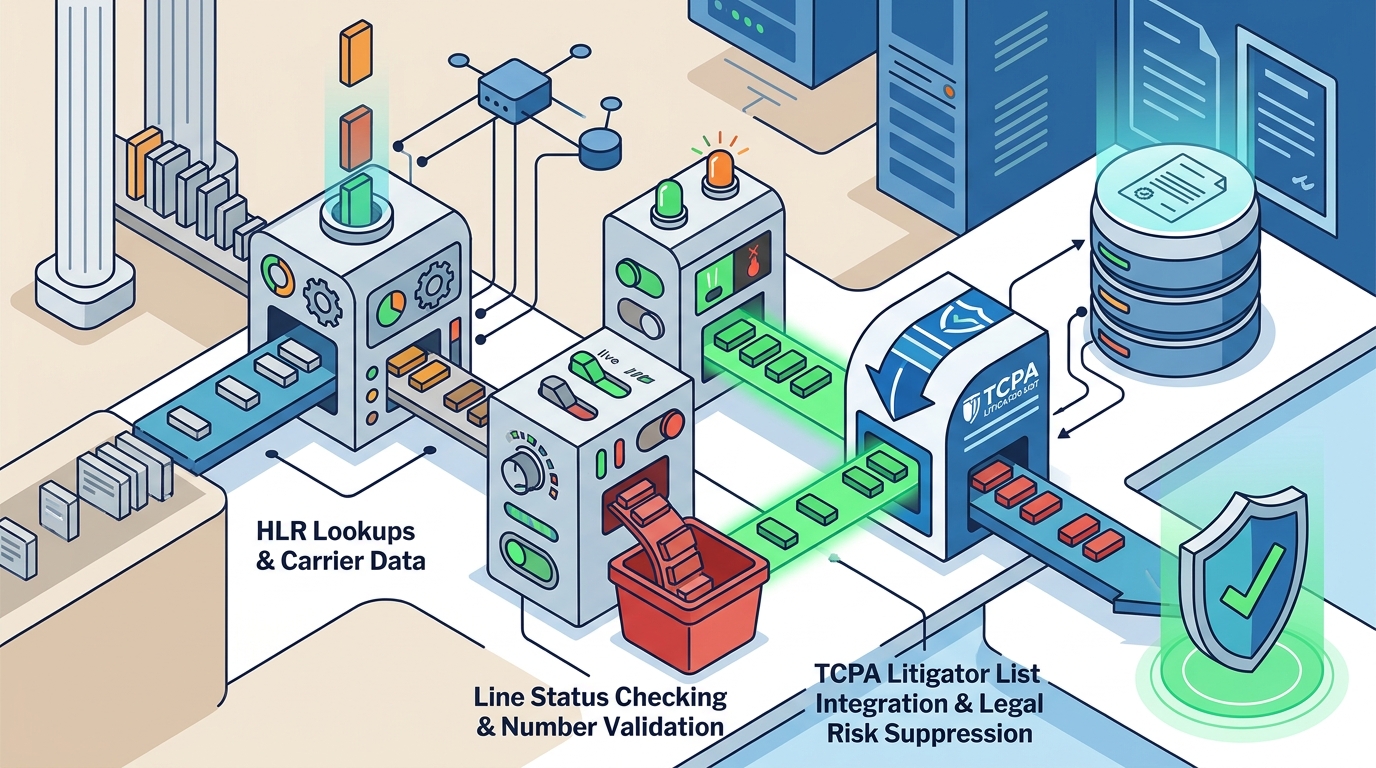
HLR, or Home Location Register, lookup is a technical method used to determine the status of a phone number. It queries the carrier's database to see if the number is active, inactive, or ported. This is the foundational technology behind most phone verification services. HLR lookups are fast and provide real-time data on line status.
How HLR Technology Works
When you perform an HLR lookup, the system sends a query to the mobile network operator. The operator responds with the status of the number. Common statuses include active, inactive, and ported. This data helps you avoid dialing disconnected numbers, which wastes time and resources. However, HLR data does not provide information about the user's identity or legal history.
Limitations of HLR in Compliance
While HLR lookups are excellent for technical hygiene, they do not address TCPA risks. A number can be fully active and connected to a professional litigator. HLR data will show it as active, but it will not flag the legal threat. This is why businesses need a layered approach that combines technical checks with legal databases. TCPA Litigator List provides the legal layer that standard HLR tools lack.
Line Status Checking
Line status checking is a broader term that encompasses HLR lookups and other methods of determining if a number is in service. It includes checking for VoIP lines, which are often used by litigators to mask their identity. VoIP numbers can be created and discarded easily, making them a common tool for serial filers. Identifying the line type is a crucial step in risk assessment.
Identifying VoIP and Prepaid Lines
VoIP and prepaid lines are high-risk categories for TCPA compliance. These lines are often used by individuals who intend to file lawsuits or send demand letters. By checking the line type, you can identify potential risks before you dial. TCPA Litigator List uses advanced algorithms to identify these patterns. Our Name Recognition Algorithm (NRA) helps detect when a known litigator switches to a new VoIP or prepaid line.
The Role of Line Type in Risk Mitigation
Knowing the line type allows you to apply different rules to different numbers. For example, you might choose to suppress all VoIP numbers in high-risk states. Or you might use a more nuanced approach that only suppresses numbers associated with known litigators. This flexibility is essential for maintaining high connect rates while minimizing legal exposure. Our platform provides the data you need to make these informed decisions.
Number Validation Tools
Number validation tools are software solutions that automate the process of checking phone numbers. These tools can be integrated into your dialer or CRM system. They provide real-time feedback on whether a number is safe to dial. Some tools focus solely on technical validation, while others include compliance features. Choosing the right tool depends on your specific business needs and risk tolerance.
Integration with Dialers and CRMs
Modern validation tools offer API integrations that allow them to work seamlessly with your existing systems. This means you can check numbers in real-time as your agents dial. If a number is flagged, the system can automatically suppress it or route it to a different queue. This automation saves time and reduces the risk of human error. TCPA Litigator List offers a real-time API that integrates with major dialer platforms.
Comparing Validation Features
| Feature | Basic HLR Tool | Comprehensive Compliance Tool |
|---|---|---|
| Active/Inactive Status | Yes | Yes |
| Line Type (VoIP/Mobile) | Yes | Yes |
| Legal Risk Flagging | No | Yes |
| Name Recognition | No | Yes |
| Real-Time API | Yes | Yes |
As shown in the table, basic tools provide technical data but lack legal insights. Comprehensive tools like TCPA Litigator List provide both. This dual capability is essential for businesses that want to protect themselves from TCPA lawsuits while maintaining efficient dialing operations.
Key Takeaways
- Phone verification confirms if a number is active, but it does not assess legal risk.
- HLR lookups are the technical foundation for checking line status in real-time.
- VoIP and prepaid lines are high-risk categories that require special attention.
- Legal suppression is distinct from technical verification and is crucial for TCPA compliance.
- The Name Recognition Algorithm helps identify litigators who switch phone numbers.
- Real-time API integration allows for automated suppression during dialing.
- Combining technical validation with legal databases provides the best protection.
- Businesses should use a layered approach to mitigate both technical and legal risks.
Frequently Asked Questions
What is the difference between phone verification and TCPA suppression?
Phone verification checks if a number is active and connected. TCPA suppression checks if the number is associated with a known litigator or legal risk. Verification is technical, while suppression is legal.
Can HLR lookups detect VoIP numbers?
Yes, HLR lookups can identify the line type, including VoIP, mobile, and landline. This helps you identify high-risk lines that are often used by litigators.
How does the Name Recognition Algorithm work?
The Name Recognition Algorithm matches phone numbers to known names of litigators. This allows the system to flag numbers even if the litigator has switched to a new phone line.
Is it legal to suppress numbers based on legal history?
Yes, suppressing numbers associated with known litigators is a common compliance practice. It helps businesses avoid potential lawsuits and statutory damages.
Can I integrate phone verification with my dialer?
Yes, most modern verification tools offer API integrations. This allows you to check numbers in real-time as your agents dial, ensuring that high-risk numbers are suppressed automatically.
What is a TCPA troll?
A TCPA troll is an individual who sends demand letters but has not filed a lawsuit. They are a significant risk for businesses because they can create legal hassles and costs without going to court.
How often should I update my suppression list?
You should update your suppression list regularly, ideally in real-time. New litigators and numbers are added to databases frequently, so static lists become outdated quickly.
Does TCPA Litigator List provide HLR lookups?
Yes, our platform includes phone verification features that check line status and type. This is combined with our legal suppression database to provide comprehensive protection.
Conclusion
Phone verification is a critical component of any outbound calling strategy. However, technical verification alone is not enough to protect your business from TCPA lawsuits. You need a comprehensive solution that combines line status checking with legal risk suppression. TCPA Litigator List provides this dual capability, using advanced technology to identify and suppress high-risk numbers. By using our platform, you can dial with confidence, knowing that your list is both technically clean and legally safe. To get started, for a consultation.