

Scrubbing by Name: Catching Serial TCPA Litigators on Prepaid Lines
Yes, you can scrub a list by name to catch serial TCPA litigators using prepaid or unregistered phones. Standard number-only scrubbing fails when these plaintiffs rotate to new, unregistered lines. By matching contact names against a registry of known litigators, you can identify high-risk targets before they dial. This guide explains how name-based suppression works, why it is critical for prepaid detection, and how to integrate it into your compliance workflow.
Prepaid and Unregistered Phone Detection
Prepaid and unregistered phone lines present a unique challenge for telemarketing compliance. These numbers often lack the carrier registration data that standard verification tools rely on. A serial TCPA litigator can easily acquire a new prepaid SIM card, register it under a different name, or leave it unregistered entirely. When this number appears in your lead database, a standard phone number verification tool might flag it as a valid mobile line. It will not flag it as a high-risk legal target. This is the primary failure mode of number-only suppression.
Detecting these risks requires looking beyond the phone number itself. You must identify the human behind the number. If the name associated with the lead matches a known TCPA litigator, the risk profile changes immediately. The number may be clean in a carrier database, but the person is a serial filer. This distinction is critical for businesses that want to avoid class action exposure. By focusing on the individual rather than just the device, you can catch these threats before they trigger a lawsuit.
The Limitations of Number-Only Scrubbing
Number-only scrubbing relies on static lists of phone numbers previously used in litigation. While useful, this method has significant blind spots. Litigators frequently rotate numbers to avoid detection. They may use a number for one lawsuit, then discard it and use a new one for the next. If your suppression list is not updated in real-time, you will miss the new number. Furthermore, number-only lists cannot account for the litigator's identity. They only know the number was used in the past, not who is currently using it.
This limitation becomes even more pronounced with prepaid phones. Because prepaid numbers are often unregistered or registered under aliases, they do not appear in standard carrier databases. A number-only scrub might return a "clean" result for a prepaid line, giving you false confidence. The reality is that the person on the other end of that line is a professional plaintiff. To mitigate this risk, you need a dynamic approach that tracks the litigator's identity across multiple numbers. This is where name-based scrubbing becomes essential.
How Name Recognition Algorithms Work
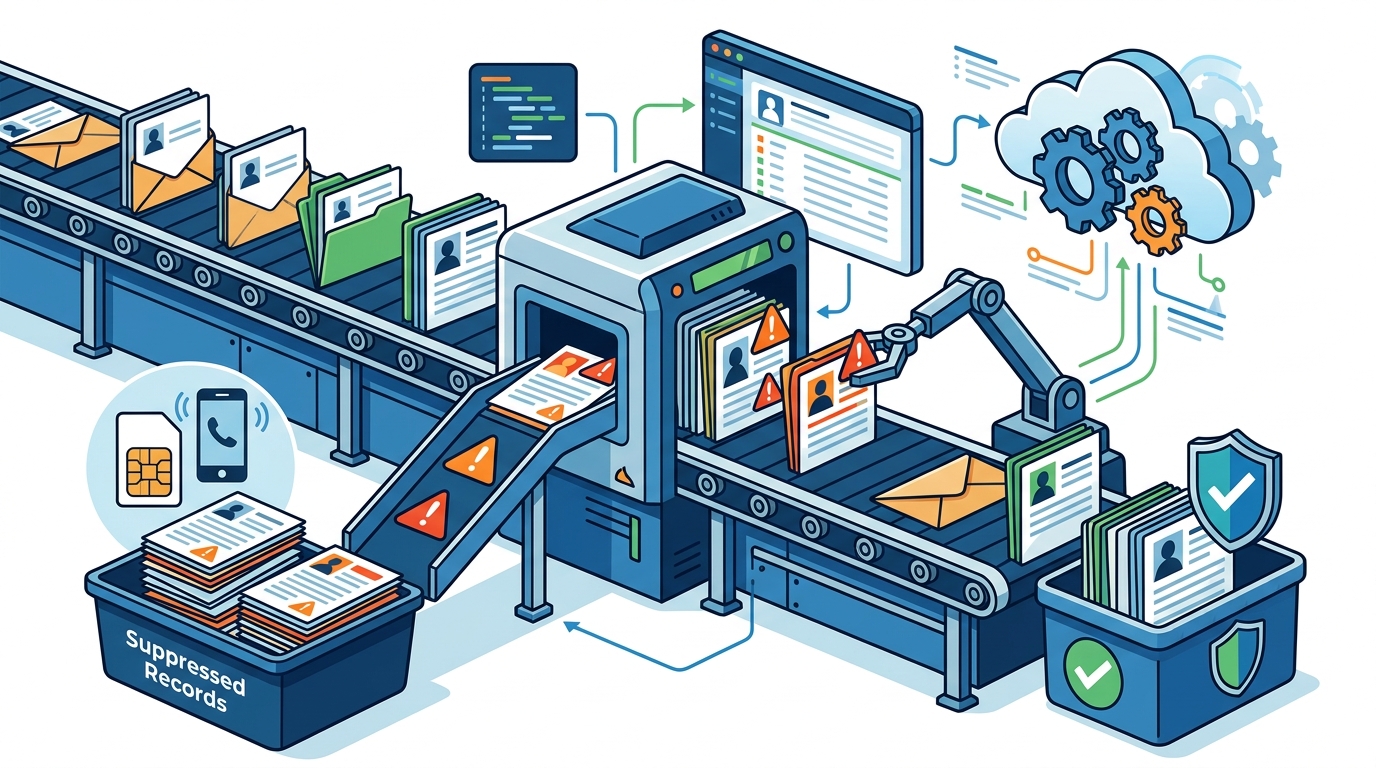
A Name Recognition Algorithm (NRA) is a proprietary technology that matches contact names against a database of known TCPA litigators and demand letter senders. Unlike number-based lists, which are static, an NRA tracks the individual. It knows that "John Doe" is a serial filer, regardless of which phone number he is currently using. When you upload a lead list, the algorithm scans the name fields. If a name matches a known litigator, the record is flagged as high-risk. This allows you to suppress the call before it is placed.
Handling Name Variations
Combining Name and Number Data
The most effective suppression strategy combines both name and number data. The NRA flags the name, while a number-based list flags the specific phone number. If either flag is triggered, the record is suppressed. This dual-layer approach provides comprehensive coverage. It catches litigators who use new numbers and those who use old numbers with new names. By leveraging both data points, you create a much stronger defense against TCPA litigation.
Integrating Name Scrubbing into Your Dialer
Integrating name-based scrubbing into your dialer requires a real-time API. Batch scrubbing is not sufficient for this use case. You need to check each number and name combination at the moment of dial. This ensures that you are always working with the most up-to-date risk data. A real-time API allows your dialer to query the suppression service for each lead. If the lead is flagged, the dialer skips it. This process happens in milliseconds, so it does not impact your dialing efficiency.
When implementing this integration, you must ensure that your lead database includes accurate name fields. If your leads only have phone numbers and no names, name-based scrubbing will not work. You need to capture the first and last name of each contact. This data should be stored in your CRM or dialer database. When you send the lead to the suppression API, include both the phone number and the name. The API will return a risk score or a flag indicating whether the lead is associated with a known litigator. This allows you to make an informed decision about whether to place the call.
Comparing Suppression Methods
Understanding the differences between suppression methods helps you choose the right strategy for your business. The table below compares number-only scrubbing, name-based scrubbing, and a combined approach. Each method has its strengths and weaknesses. The best approach depends on your specific risk profile and the nature of your lead sources.
| Method | Prepaid Detection | Number Rotation Resistance | Implementation Complexity |
|---|---|---|---|
| Number-Only Scrubbing | Low | Low | Low |
| Name-Based Scrubbing | High | High | Medium |
| Combined Approach | High | High | High |
Key Takeaways
- Number-only scrubbing fails to detect serial litigators who use prepaid or unregistered phones.
- Name-based scrubbing identifies the individual behind the number, providing a more robust defense.
- Real-time API integration is essential for effective name-based suppression at the moment of dial.
- Combining name and number data provides the highest level of protection against TCPA litigation.
- Accurate name fields in your lead database are critical for name-based scrubbing to work.
- Prepaid lines are a common tool for serial litigators to avoid detection.
- Regular updates to your suppression database are necessary to keep up with new litigators.
Frequently Asked Questions
Can name-based scrubbing catch litigators who use aliases?
Yes, a robust Name Recognition Algorithm can catch litigators who use aliases. It uses fuzzy matching and normalization techniques to identify that different name entries refer to the same individual. This allows it to flag records even when the name is slightly different from the one in the database.
How does name-based scrubbing work with prepaid phones?
Name-based scrubbing works with prepaid phones by focusing on the name associated with the lead, not the phone number. Since prepaid numbers are often unregistered, number-based scrubbing may fail. Name-based scrubbing bypasses this issue by identifying the litigator directly.
Is name-based scrubbing a replacement for number-based scrubbing?
No, name-based scrubbing is not a replacement for number-based scrubbing. It is a complement. The most effective strategy is to use both methods together. This provides comprehensive coverage and maximizes your protection against TCPA litigation.
How often should I update my suppression database?
You should update your suppression database in real-time. New litigators are added to the database daily. Using a real-time API ensures that you are always working with the most up-to-date risk data. Batch updates are not sufficient for this use case.
What data do I need to provide for name-based scrubbing?
You need to provide the phone number and the first and last name of the contact. The API will use this data to check against the suppression database. If the name matches a known litigator, the record will be flagged as high-risk.
Can name-based scrubbing guarantee compliance with TCPA laws?
No, no screening service can guarantee compliance with TCPA laws. Screening results are informational and do not constitute a legal determination. You remain responsible for obtaining required consent and maintaining appropriate suppression lists. Consult qualified legal counsel regarding specific compliance requirements.
Conclusion
Scrubbing by name is a powerful tool for catching serial TCPA litigators who use prepaid or unregistered phones. It addresses the limitations of number-only scrubbing by focusing on the individual rather than the device. By integrating a Name Recognition Algorithm into your dialer, you can significantly reduce your litigation risk. This approach is essential for businesses that want to protect themselves from class action exposure. TCPA Litigator List provides the technology and data you need to implement this strategy effectively. To get started, to learn more about our name-based scrubbing solutions.