
What Specific TCPA Litigator Database Includes Multi-Case Plaintiffs?
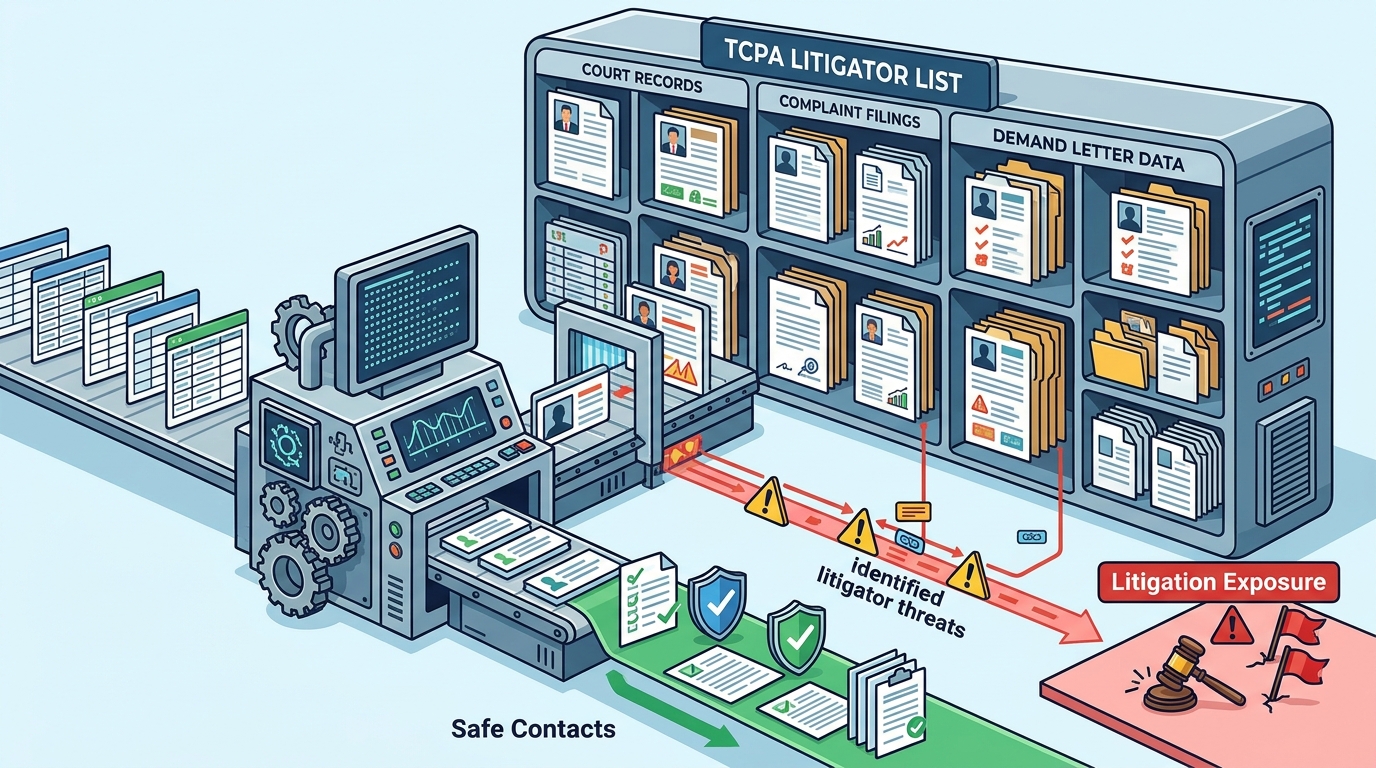
Specific TCPA litigator databases that include multi-case plaintiffs are specialized suppression lists compiled from court records, complaint filings, and demand letter data. These databases track individuals who have filed multiple lawsuits or sent repeated legal threats, allowing businesses to identify high-risk numbers before dialing. This guide covers the mechanics of these databases, the profile of multi-case plaintiffs, and the technical process of calling list scrubbing to mitigate litigation exposure.
TCPA Litigator Databases
A TCPA litigator database is a specialized repository of phone numbers associated with individuals who have filed lawsuits under the Telephone Consumer Protection Act. Unlike standard Do Not Call (DNC) registries, which track consumer opt-outs, these databases focus on the plaintiffs and their associated contact information. The primary function of such a database is to provide risk intelligence for outbound calling campaigns. By cross-referencing a business's calling list against this database, organizations can identify numbers that belong to known serial filers or professional plaintiffs.
Composition of the Data
These databases are built by aggregating data from multiple sources. The most robust lists include phone numbers found in court filings, complaint documents, and demand letters. A critical distinction in the industry is the separation between "litigators" and "trolls." A litigator is an individual who has actually filed a lawsuit, while a troll is an individual who sends demand letters but has not yet filed a suit. Including both categories provides a broader safety net for compliance teams. The data is continuously updated as new cases are filed and new demand letters are received.
Why Standard DNC Lists Are Insufficient
Standard DNC lists are designed to honor consumer preferences, not to mitigate legal liability. A number may be compliant with the DNC registry but still belong to a professional plaintiff who is actively seeking TCPA violations. Therefore, a dedicated litigator database is necessary for comprehensive risk management. It serves as a secondary layer of defense, ensuring that even if a number is not on the federal DNC list, it is still screened for litigation risk.
Multi-Case Plaintiffs
Multi-case plaintiffs are individuals who have filed multiple TCPA lawsuits or sent numerous demand letters over a defined period. These individuals are often referred to as "professional plaintiffs" or "serial filers." Their behavior is distinct from typical consumers who file a single complaint due to a specific annoyance. Instead, multi-case plaintiffs often operate with a systematic approach to identifying potential violations. They may use specific phone numbers that are registered to them or their associates to receive calls, knowing that a single violation can result in statutory damages.
Identifying Patterns in Filings
Identifying multi-case plaintiffs requires analyzing the frequency and nature of their legal actions. A single lawsuit may be an isolated incident, but a pattern of multiple filings indicates a professional approach. Databases track the number of cases associated with a specific phone number or name. This allows businesses to prioritize risk mitigation for numbers with a high case count. The more cases associated with a number, the higher the potential exposure for a business that contacts it.
The Role of Demand Letters
Demand letters are a precursor to litigation. Many multi-case plaintiffs send demand letters to businesses before filing a lawsuit. These letters often cite specific calls or texts and demand a settlement. By tracking the senders of these letters, databases can flag numbers that are likely to be used in future lawsuits. This proactive approach allows businesses to suppress these numbers before a formal complaint is filed. It is a critical component of a comprehensive compliance strategy.
Calling List Scrubbing
Calling list scrubbing is the process of removing or flagging phone numbers from a calling list based on specific compliance criteria. In the context of TCPA risk mitigation, scrubbing involves comparing a business's list of contacts against a TCPA litigator database. The goal is to identify and remove numbers associated with known litigators or multi-case plaintiffs before a campaign goes live. This process can be performed manually, but it is typically automated using API integrations or batch file uploads.
Batch Scrubbing vs. Real-Time API
There are two primary methods for scrubbing calling lists. Batch scrubbing involves uploading a large file of phone numbers to a service provider, who then returns a cleaned file with high-risk numbers removed. This method is suitable for large, static lists that are used for periodic campaigns. Real-time API scrubbing, on the other hand, checks each number individually at the moment of dialing. This method is ideal for dynamic lists or dialers that require immediate feedback. Both methods have their advantages, and many businesses use a combination of both.
Integration with Dialers
For maximum effectiveness, scrubbing should be integrated directly into the dialing system. This ensures that no call is placed to a high-risk number. API integrations allow the dialer to query the litigator database in real-time. If a match is found, the dialer can automatically skip the number or flag it for review. This seamless integration minimizes the risk of accidental contact and ensures that compliance is maintained throughout the campaign.
| Feature | Standard DNC List | TCPA Litigator Database |
|---|---|---|
| Primary Purpose | Honor consumer opt-outs | Mitigate litigation risk |
| Data Source | Consumer registrations | Court filings, demand letters |
| Target Audience | All consumers | Known litigators, serial filers |
| Legal Protection | Safe harbor for DNC compliance | Risk intelligence, no legal safe harbor |
| Update Frequency | Monthly | Daily or real-time |
Key Takeaways
- Specific TCPA litigator databases track phone numbers associated with individuals who have filed multiple lawsuits or sent demand letters.
- Multi-case plaintiffs are professional filers who systematically seek TCPA violations, posing a higher risk than typical consumers.
- Standard DNC lists are insufficient for mitigating litigation risk because they do not track professional plaintiffs.
- Calling list scrubbing is the process of removing high-risk numbers from a calling list before a campaign begins.
- Real-time API scrubbing provides immediate feedback and is ideal for dynamic dialing systems.
- Batch scrubbing is suitable for large, static lists and allows for comprehensive pre-campaign cleaning.
- Integrating scrubbing directly into the dialer ensures that no call is placed to a flagged number.
- Regular updates to the litigator database are essential to capture new cases and demand letters.
Frequently Asked Questions
What is a TCPA litigator database?
A TCPA litigator database is a specialized list of phone numbers associated with individuals who have filed TCPA lawsuits or sent demand letters. It is used to mitigate litigation risk in outbound calling campaigns.
How are multi-case plaintiffs identified?
Multi-case plaintiffs are identified by tracking the frequency of lawsuits and demand letters associated with a specific phone number or name. A high number of filings indicates a professional plaintiff.
Is scrubbing against a litigator database a legal requirement?
No, scrubbing against a litigator database is not a legal requirement. However, it is a best practice for risk mitigation and is recommended for businesses engaged in outbound calling.
What is the difference between a litigator and a troll?
A litigator is an individual who has filed a lawsuit, while a troll is an individual who sends demand letters but has not filed a suit. Both are tracked in comprehensive databases.
How often should I scrub my calling list?
It is recommended to scrub your calling list before every campaign. For dynamic lists, real-time API scrubbing is ideal. For static lists, batch scrubbing before each use is sufficient.
Can a litigator database guarantee compliance?
No, no screening service can guarantee compliance or prevent litigation. It is a risk mitigation tool that helps identify high-risk numbers, but businesses remain responsible for overall compliance.
Conclusion
Understanding the specific TCPA litigator databases that include multi-case plaintiffs is essential for businesses engaged in outbound calling. These databases provide critical risk intelligence that standard DNC lists cannot offer. By identifying and suppressing numbers associated with professional plaintiffs, businesses can significantly reduce their exposure to TCPA litigation. Implementing a robust scrubbing process, whether through batch uploads or real-time API integrations, is a key component of a comprehensive compliance strategy. TCPA Litigator List offers advanced tools to help you navigate this complex landscape and protect your business from unnecessary legal risks.