
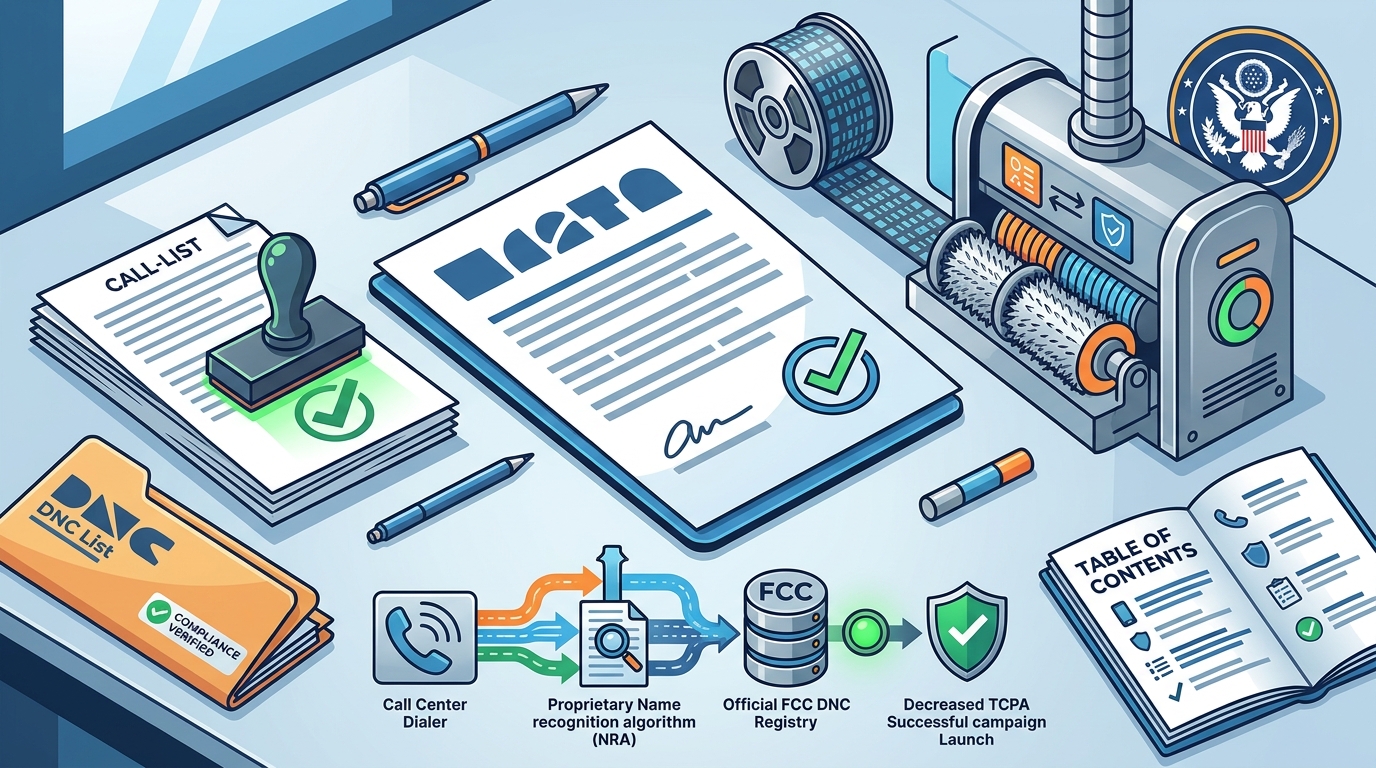
Check the National Do Not Call (DNC) Registry by scrubbing your calling lists against the official FCC database before every campaign. This mandatory step prevents illegal calls to registered numbers and reduces TCPA liability. TCPA Litigator List provides automated tools to integrate this check into your dialer workflow efficiently.
Understanding the Registry Requirements
The National Do Not Call Registry is a federal database maintained by the Federal Communications Commission (FCC). It contains phone numbers of consumers who have requested to be excluded from telemarketing calls. Businesses must scrub their calling lists against this registry at least every 31 days. Failure to do so results in statutory damages of $500 to $1,500 per violation under the Telephone Consumer Protection Act (TCPA).
Many businesses assume that scrubbing once is enough. This is a dangerous misconception. The registry updates monthly, and new numbers are added constantly. A list that was clean in January may contain thousands of newly registered numbers by February. Regular scrubbing is not optional; it is the baseline for legal telemarketing operations.
Choosing the Right Scrubbing Method
There are two primary ways to check the registry: manual batch scrubbing and real-time API integration. Manual scrubbing involves downloading the registry file and comparing it against your list using spreadsheet software or a dedicated tool. This method is suitable for small lists but becomes unmanageable as volume grows.
Real-time API integration is the preferred method for modern dialers. It checks each number against the registry at the moment of dialing. This ensures that even if a number is added to the registry after your last batch scrub, your system will block the call. TCPA Litigator List offers a real-time endpoint API that supports this workflow, allowing you to verify numbers instantly during campaign execution.
State-Level DNC Considerations
Federal compliance is only half the battle. Many states maintain their own Do Not Call registries with stricter rules. For example, some states require businesses to register with the state before making any telemarketing calls. Others have specific penalties that exceed federal limits. Ignoring state registries can lead to separate legal actions even if you are federally compliant.
When scrubbing your lists, you must account for these state-specific databases. A number might be clean on the federal registry but listed on a state registry. Advanced scrubbing services allow you to filter by state, ensuring that you respect local regulations. This layered approach is critical for businesses operating across multiple jurisdictions.
Building Your Internal Suppression List
The National DNC Registry is external. You must also maintain an internal suppression list. This list contains numbers of customers who have asked your specific company not to call them. The TCPA requires you to honor these requests for at least five years. Adding these numbers to your internal list is a legal obligation, not a best practice.
Integrating your internal suppression list with the national registry scrubbing process is essential. If a customer opts out of your calls, that number must be blocked immediately, regardless of its status on the national registry. TCPA Litigator List allows you to upload your own suppression files alongside the national registry check, ensuring that both external and internal exclusions are honored in a single pass.
Benefits of Automated Registry Checking
Manual scrubbing is prone to human error. A single missed column or a formatting issue can result in calling a registered number. Automated systems eliminate this risk by standardizing the data format and applying consistent logic. Automation also provides an audit trail, which is crucial if you face a compliance inquiry or lawsuit.
Using an automated service like TCPA Litigator List ensures that your scrubbing process is consistent and documented. The platform updates its database daily, meaning you are always checking against the most current registry data. This level of precision is difficult to achieve with manual methods and is a key differentiator for serious compliance programs.
Key Takeaways
- Scrub your calling lists against the National DNC Registry at least every 31 days.
- Real-time API integration is more effective than batch scrubbing for large campaigns.
- State-level DNC registries often have stricter rules and must be checked separately.
- Maintain an internal suppression list for customer opt-outs and honor it for five years.
- Automated scrubbing reduces human error and provides a necessary audit trail.
- Statutory damages for TCPA violations range from $500 to $1,500 per call.
Frequently Asked Questions
How often must I check the National DNC Registry?
You must scrub your calling lists against the registry at least every 31 days. Many businesses choose to scrub more frequently to account for monthly registry updates.
What is the difference between the National DNC Registry and a state registry?
The National DNC Registry is a federal database maintained by the FCC. State registries are maintained by individual states and may have different rules, such as requiring business registration or imposing higher penalties.
Can I use a third-party service to scrub my lists?
Yes, you can use third-party services to scrub your lists. However, you remain legally responsible for ensuring that the scrubbing is accurate and up to date. Using a reliable service like TCPA Litigator List can help mitigate this risk.
What happens if I call a number on the DNC Registry?
If you call a number on the DNC Registry without an exemption, you may face statutory damages of $500 to $1,500 per violation. Willful violations can result in higher penalties.
Do I need to scrub against the registry if I have prior express written consent?
Yes, you still need to scrub against the registry. Prior express written consent is an exemption to the DNC Registry, but you must still maintain accurate records of that consent. Scrubbing helps ensure that your consent records are valid and current.
Conclusion
Checking the National Do Not Call Registry is a fundamental step in TCPA compliance. It protects your business from legal liability and ensures that your telemarketing efforts are directed at willing consumers. By using automated tools and maintaining both federal and state-level suppression lists, you can build a robust compliance program. TCPA Litigator List provides the technology and data you need to stay ahead of regulatory changes and protect your brand.