
Which DNC Compliance Tools Work for High-Volume Outbound Call Centers?
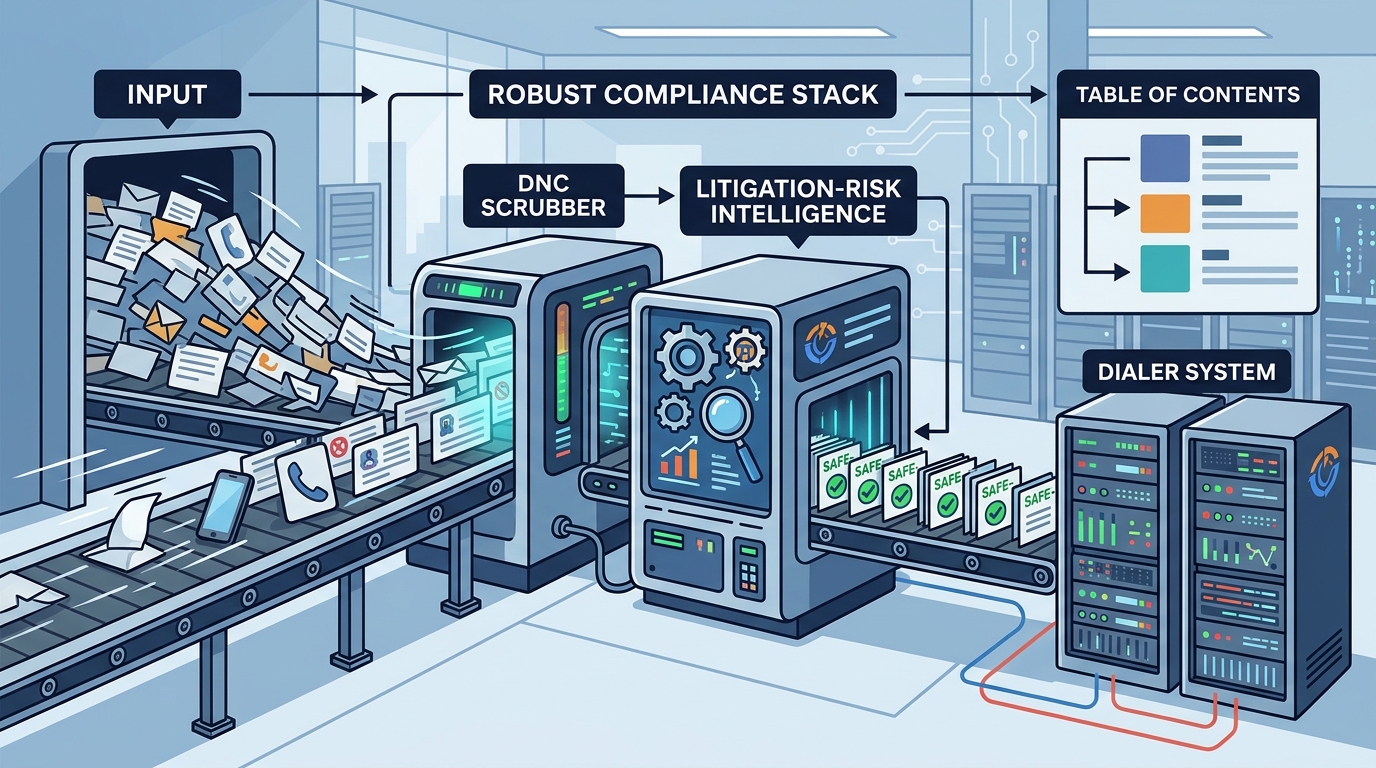
High-volume outbound call centers face strict Do Not Call (DNC) and Telephone Consumer Protection Act (TCPA) regulations. The most effective compliance tools combine automated list scrubbing with specialized litigation-risk intelligence. This guide explains how to build a robust compliance stack that protects your dialers from serial filers and regulatory penalties.
Litigator Database Screening
Standard DNC scrubbing is no longer sufficient for high-volume operations. Serial TCPA litigators, often called "trolls," actively seed their phone numbers into lead sources to trigger automated dialers. When a dialer hits one of these numbers, the filer initiates a lawsuit or demand letter. A litigator database is a specialized registry of phone numbers and names associated with past TCPA lawsuits and demand letters.
The Threat of Serial Filers
Serial filers operate as a business model. They do not care about the product being sold; they care about the statutory damages available under the TCPA. By maintaining a registry of known litigators, compliance teams can identify these high-risk numbers before the dialer initiates a call. This proactive approach prevents the initial contact that triggers legal action.
How Litigator Screening Works
Screening against a litigator database involves matching your calling list against a compiled list of known plaintiffs. This process requires more than just a simple phone number match. Advanced platforms use a Name Recognition Algorithm (NRA) to identify individuals associated with litigation, even if they use a different phone number than the one on file. This multi-layered approach ensures that the risk is mitigated at the identity level, not just the number level.
Integration with Dialers
For high-volume call centers, manual scrubbing is impossible. Litigator screening must be integrated directly into the dialing workflow via API. This ensures that every number is checked in real-time before the call is placed. If a match is found, the system can automatically suppress the number or flag it for manual review. This integration is critical for maintaining compliance at scale.
TCPA Compliance Automation
Compliance is not a one-time task; it is a continuous process. TCPA compliance automation refers to the use of software and APIs to manage consent, suppression, and scrubbing workflows automatically. For high-volume centers, manual processes are prone to error and cannot keep up with the volume of calls. Automation ensures that every step of the compliance lifecycle is handled consistently and accurately.
Consent Management and Tracking
The foundation of TCPA compliance is prior express written consent (PEWC). Automation tools must capture, store, and verify this consent. This includes tracking the source of the lead, the date of consent, and the specific language used. If a customer revokes consent, the system must immediately add them to a suppression list. This audit trail is essential for defending against lawsuits.
Suppression List Management
A suppression list is a database of numbers that must not be called. This includes numbers from the National DNC Registry, internal opt-outs, and litigator matches. Automation tools must synchronize these lists across all dialers and campaigns. This ensures that a number suppressed in one campaign is also suppressed in all others. Failure to do so can result in accidental violations and significant legal exposure.
Real-Time Scrubbing via API
| Feature | Standard DNC Scrubbing | Advanced Litigator Screening |
|---|---|---|
| Primary Data Source | National DNC Registry | Compiled Litigator and Troll Databases |
| Matching Method | Phone Number Only | Phone Number + Name Recognition Algorithm |
| Risk Identification | Regulatory Violations | Serial Filers and Demand Letter Senders |
| Integration Speed | Batch or Real-Time | Real-Time API |
| Best For | Basic Compliance | High-Volume, High-Risk Operations |
Key Takeaways
- Standard DNC scrubbing is insufficient for high-volume call centers facing serial litigators.
- A litigator database is a registry of phone numbers and names associated with past TCPA lawsuits.
- Name Recognition Algorithms (NRA) enhance screening by identifying litigators across multiple numbers.
- Real-time API integration is essential for scrubbing lists before dialing.
- Consent management automation ensures an audit trail for PEWC.
- Suppression lists must be synchronized across all campaigns and dialers.
- Compliance is a continuous process, not a one-time task.
- Screening results are informational and do not constitute legal advice.
Frequently Asked Questions
What is a TCPA litigator list?
A TCPA litigator list is a database of phone numbers and names associated with individuals who have filed TCPA lawsuits or sent demand letters. It is used to screen calling lists to prevent contact with these high-risk individuals.
How does a Name Recognition Algorithm work?
A Name Recognition Algorithm (NRA) is a proprietary technology that matches names in a calling list against a database of known litigators. This allows for the identification of serial filers even if they use a different phone number than the one on file.
Is scrubbing against the National DNC Registry enough?
No. While scrubbing against the National DNC Registry is a legal requirement, it does not protect against serial litigators who are not on the registry. Advanced litigator screening is necessary for high-volume operations.
Can I use a litigator list to block all calls to those numbers?
Screening results are informational. While it is common practice to suppress numbers on a litigator list, the decision to block a call should be made based on your specific risk tolerance and legal counsel's advice.
How often should I update my litigator database?
Litigator databases should be updated continuously. New lawsuits are filed daily, and new numbers are added to the registry. Using a service that provides real-time updates ensures that your screening is always current.
Does using a litigator list guarantee compliance?
No. No screening service can guarantee compliance or prevent litigation. Customers remain responsible for obtaining required consent, maintaining suppression lists, and complying with all applicable laws.
Conclusion
Protecting your high-volume outbound call center requires more than basic DNC scrubbing. By integrating advanced litigator database screening with comprehensive TCPA compliance automation, you can significantly reduce your legal risk. TCPA Litigator List provides the specialized tools and data you need to identify and mitigate these risks effectively. Visit our FAQ page for more details on how our services work, or explore our subscription packages to find the right solution for your business. For a deeper understanding of compliance best practices, refer to our TCPA Checklist. To get started, for a consultation.