
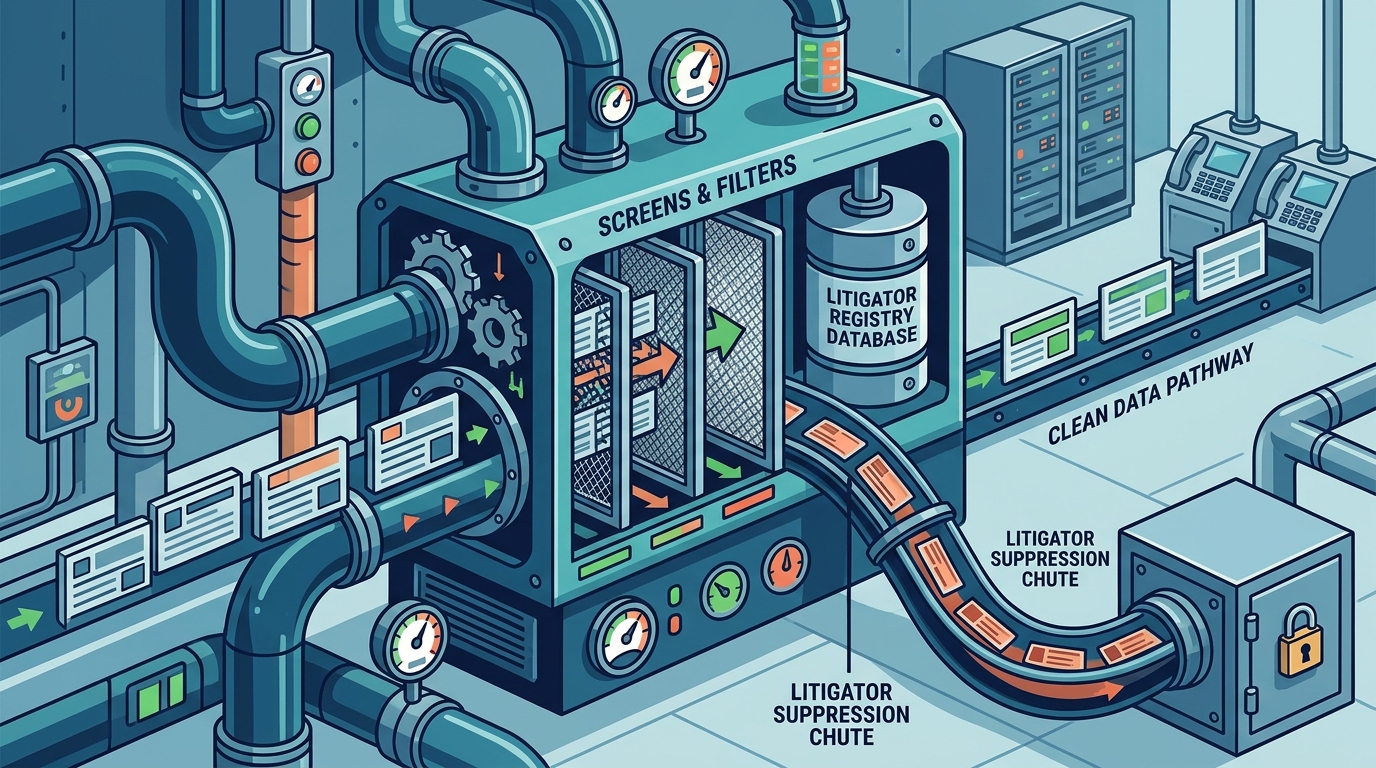
Call centers can screen out known litigation filers by integrating a specialized suppression database into their dialing workflows. This process involves matching outbound contact lists against a registry of phone numbers and names associated with professional plaintiffs and repeat TCPA filers. By removing these high-risk records before a campaign launches, organizations significantly reduce the probability of triggering a class action lawsuit. This proactive approach shifts compliance from a reactive legal defense to a preventive data hygiene practice.
The Mechanics of Litigator Database Screening
Standard Do Not Call (DNC) registry checks are insufficient for modern telemarketing risk management. The Telephone Consumer Protection Act (TCPA) is a U.S. federal law enacted in 1991 to protect consumers from unwanted telemarketing calls, faxes, and texts. While the federal DNC registry prevents calls to consumers who have opted out of marketing, it does not identify individuals who are professional plaintiffs. A TCPA litigator is an individual or attorney who files lawsuits against businesses for alleged violations of the TCPA. Many of these filers use specific phone numbers that appear in multiple lawsuits over time. Screening against a litigator database involves cross-referencing your contact list with a compiled list of these known numbers. This ensures that your dialer does not attempt to reach a professional plaintiff who may be actively monitoring for violations.
Integrating Suppression Data into Dialer Workflows
Effective screening requires real-time or batch integration with your dialing infrastructure. Businesses can utilize online scrubbing tools to upload call lists in Excel or CSV formats for batch processing. Alternatively, API integration allows for real-time scrubbing directly within the dialer or database. This method is critical for high-volume operations where lists are updated daily. The API checks each number against the suppression list at the moment of dialing. If a match is found, the system flags the record and prevents the call from being placed. This immediate feedback loop ensures that even newly added litigator numbers are caught before they can generate liability. For example, a call center using a real-time endpoint API can process thousands of records per minute, ensuring that no high-risk number slips through during a live campaign.
The Role of Name Recognition Algorithms
Phone numbers alone are not always a reliable identifier for professional plaintiffs. Litigators and serial filers often rotate through different phone numbers, including prepaid lines, to avoid detection. A Name Recognition Algorithm (NRA) is a proprietary technology that matches contact names against a database of known litigators and trolls. This technology safeguards against the threat of "trac" phone numbers, where a litigator uses a different number than the one listed in previous lawsuits. By scrubbing against names, the system can identify a known plaintiff even if they are using a new phone number. This layer of defense is crucial because it addresses the failure mode that catches most number-only lists. When a serial filer rotates to a new line, the name still trips the flag, providing a more robust defense than simple number matching.
Identifying TCPA Trolls and Demand Letter Senders
Not all legal threats result in a filed lawsuit. A TCPA troll is an individual who sends demand letters but has never sued. These individuals often target businesses with threats of litigation to extract settlements. Including troll numbers in your suppression list helps mitigate the risk of receiving these harassing demand letters. The database of trolls and DNC complainers adds a significant layer of protection beyond standard litigator lists. By identifying these individuals before contact, businesses can avoid the emotional stress and administrative burden of responding to baseless threats. This proactive identification allows compliance teams to focus their resources on genuine compliance issues rather than managing nuisance legal correspondence. The distinction between a litigator and a troll is important for risk assessment, as both groups pose financial and operational risks to call centers.
Building a Comprehensive Compliance Strategy
Screening against a litigator database is one component of a broader TCPA compliance program. It should be used in conjunction with consent management, DNC registry checks, and internal suppression lists. No single tool can eliminate all TCPA exposure, but identifying known litigators before contact adds an important defensive layer. Compliance teams must stay informed as new high-risk numbers enter the ecosystem. Regular updates to the suppression database ensure that the list remains current with the latest litigation trends. By combining real-time scrubbing, name recognition, and continuous database updates, call centers can build a resilient compliance framework. This approach reduces unnecessary legal exposure before it turns into a lawsuit, allowing businesses to call with confidence.
Key Takeaways
- Standard DNC checks do not identify professional TCPA litigators or serial filers.
- Real-time API integration allows for immediate suppression of high-risk numbers during live dialing.
- Name Recognition Algorithms (NRA) protect against litigators rotating to new phone numbers.
- Screening against TCPA trolls helps prevent demand letter harassment and settlement threats.
- Suppression databases must be updated regularly to reflect new litigation filings.
- Combining litigator screening with consent management creates a robust compliance defense.
Frequently Asked Questions
What is the TCPA Litigator List?
The TCPA Litigator List compiles phone numbers used in TCPA litigation from 2000 to present day. It includes numbers associated with professional plaintiffs and repeat filers.
How does the TCPA Litigator List work?
The service operates by offering the latest phone numbers associated with TCPA lawsuits and litigators. You can utilize the services by uploading call lists to an online scrubbing tool or integrating the TCPA API for real-time scrubbing.
What sets the TCPA Litigator List apart from other scrubbing services?
It features a proprietary Name Recognition Algorithm (NRA) that scrubs against litigators' names, safeguarding against trac phone numbers. It also identifies TCPA trolls who send demand letters without filing lawsuits.
How to subscribe to the TCPA Litigator List?
Visit the homepage and click on 'Subscribe.' Choose the plan that best suits your company's needs, complete the registration, and make the payment to access the API and scrubbing tools.
What is the DNC Complainers List?
The DNC Complainers List consists of individuals who have lodged complaints but have not yet sent demand letters or initiated legal action.
How does the Online phone scrub work?
Upload your list, select the databases to scrub against, and hit 'Scrub' to download a clean list along with a separate list identifying the flagged numbers.
Conclusion
Screening out known litigation filers is a critical step in protecting call centers from TCPA liability. By leveraging a specialized database of litigators, trolls, and DNC complainers, businesses can significantly reduce their risk of facing class action lawsuits. TCPA Litigator List provides the tools and technology necessary to implement this screening effectively. To plan your visit, to discuss how our suppression services can integrate with your dialing infrastructure.