
Using a TCPA Litigator Database for Calling List Compliance
A TCPA litigator database is a specialized registry of phone numbers and names associated with professional plaintiffs who file Telephone Consumer Protection Act lawsuits. Using this tool allows businesses to scrub their calling lists before dialing, identifying high-risk contacts that could trigger statutory damages. By integrating this data into your compliance workflow, you can reduce legal exposure and protect your revenue from costly litigation.
Understanding the TCPA Litigation Threat
The landscape of telemarketing litigation has shifted dramatically since 2015. Professional plaintiffs, often referred to as TCPA trolls, actively seed their phone numbers into lead generation sources. They wait for a single call to trigger a class action lawsuit. This strategy is designed to exploit the strict liability provisions of the TCPA. The financial impact on businesses can be severe and immediate.
Businesses that rely solely on the National Do Not Call Registry are leaving themselves vulnerable. The DNC Registry does not track professional litigators. It only tracks consumers who have requested not to be called. A number can be clean on the DNC list but still belong to a serial filer. This gap in protection is where most litigation risk originates. Understanding this distinction is the first step in building a robust compliance program.
How a TCPA Litigator Database Works
A TCPA litigator database is a continuously updated collection of phone numbers and names linked to filed lawsuits. Research teams monitor court filings to identify new plaintiffs and their associated contact information. This data is then compiled into a searchable registry. The goal is to provide a snapshot of who is currently active in the litigation space. This allows businesses to filter out these numbers before they are dialed.
Standard number-only lists have a significant limitation. Litigators can rotate to new prepaid phone lines to avoid detection. If a database only tracks phone numbers, it misses the individual when they change their number. This is where advanced technology becomes critical. A proprietary Name Recognition Algorithm (NRA) matches the name of the contact against the registry. This ensures that even if the number changes, the individual is still flagged as a high-risk contact.
The database also distinguishes between actual litigators and demand letter senders. A TCPA troll is an individual who sends demand letters but has never filed a lawsuit. While they may not currently be in court, they represent a significant nuisance and potential future threat. Including these profiles in your suppression list helps you avoid unnecessary legal correspondence. This proactive approach saves time and resources for your legal and operations teams.
Integration Methods for Your Dialer
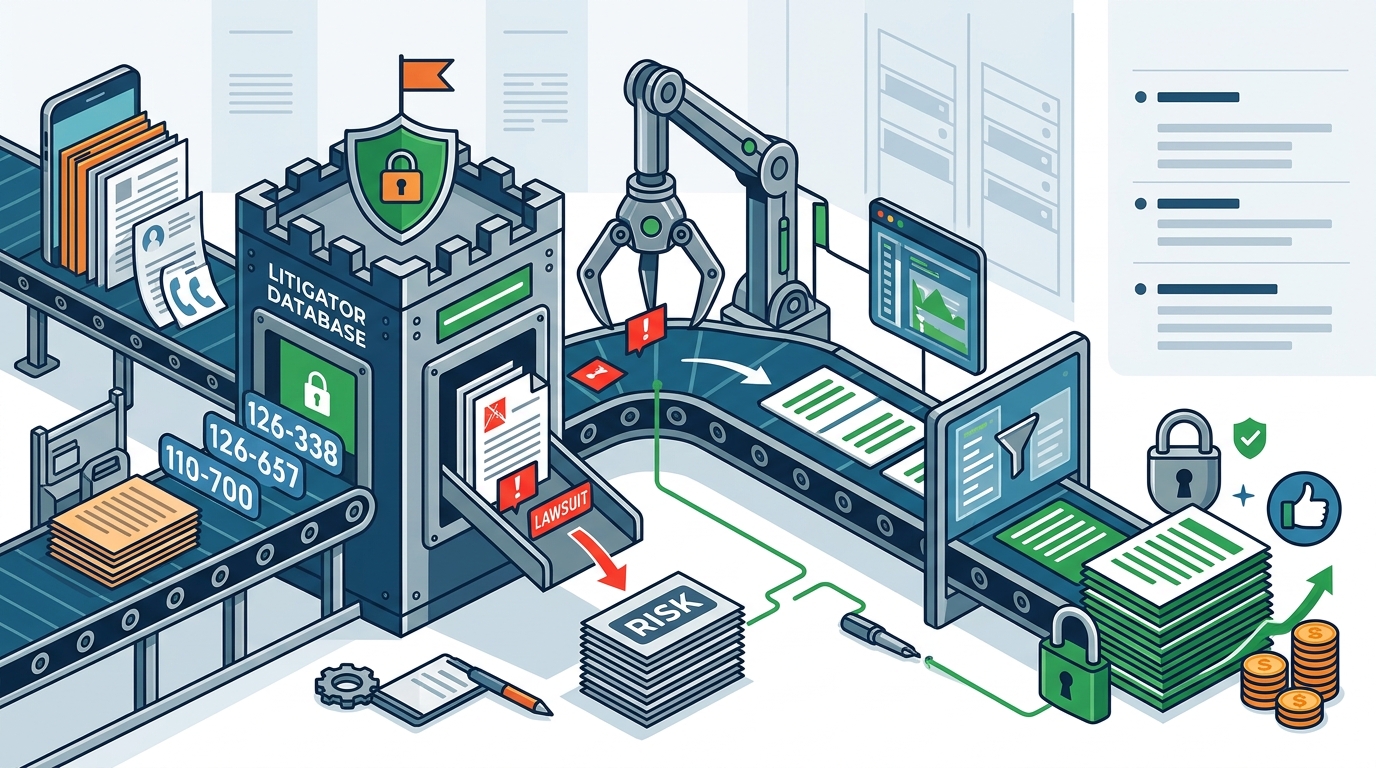
There are two primary ways to integrate a litigator database into your operations. The first is batch scrubbing, where you upload your entire calling list to a web portal. The system processes the file and returns a clean list along with a report of flagged numbers. This method is suitable for businesses that run campaigns on a weekly or monthly basis. It requires manual intervention but provides a clear audit trail of what was removed.
The second method is real-time API integration. This approach embeds the check directly into your dialer or CRM. Before the dialer places a call, it sends the phone number to the API endpoint. The system returns a response in milliseconds, indicating whether the number is safe to call. This method is ideal for high-volume operations that require continuous compliance. It ensures that no call is placed to a flagged number, even if the list was clean when it was originally imported.
For enterprise clients, dedicated API infrastructure offers additional benefits. It provides higher throughput and sub-account isolation for different brands or clients. This allows you to maintain separate suppression lists for each entity. It also provides timestamped records of every check, which can be produced in discovery if needed. This level of detail is crucial for demonstrating good faith compliance efforts to a court.
Compliance Beyond Scrubbing
Using a litigator database is a critical component of compliance, but it is not a standalone solution. You must still obtain prior express written consent for all marketing calls and texts. This consent must be documented and retained for the duration of the relationship. Additionally, you must honor all opt-out requests immediately. A centralized suppression list should be maintained for at least five years. These foundational practices are required by law and cannot be replaced by screening tools.
Training your employees is equally important. Agents must be educated on TCPA requirements, including calling hours and identification protocols. Regular training sessions help ensure that your team understands the risks and responsibilities associated with outbound calling. Furthermore, you should monitor regulatory updates closely. The legal landscape is evolving, with courts increasingly interpreting the statute independently of FCC rules. Staying informed helps you adapt your compliance strategy to new legal standards.
Finally, consider the state-specific regulations that may apply to your operations. Some states have their own Do Not Call registries and stricter consent requirements. A comprehensive scrubbing service should allow you to filter against state-specific lists. This ensures that you are compliant not just with federal law, but with the laws of every state where you operate. This multi-layered approach provides the strongest possible defense against litigation.
Key Takeaways
- A TCPA litigator database is a registry of numbers and names associated with professional plaintiffs.
- Statutory damages for TCPA violations can reach $4,500 per call, making prevention essential.
- Name Recognition Algorithms are critical for catching litigators who rotate phone numbers.
- Real-time API integration offers the highest level of protection for high-volume dialers.
- Screening tools do not replace the need for valid consent and opt-out suppression.
- State-specific regulations may require additional scrubbing beyond federal requirements.
- Regular updates to the database are necessary to keep pace with new litigation filings.
Frequently Asked Questions
What is a TCPA litigator database?
A TCPA litigator database is a specialized list of phone numbers and names associated with individuals who have filed TCPA lawsuits. It is used to scrub calling lists to prevent accidental violations.
How often is the database updated?
Can a database guarantee compliance?
No, no screening service can guarantee compliance. It is a risk mitigation tool that helps identify high-risk numbers, but businesses must still follow all legal requirements for consent and suppression.
What is the difference between a litigator and a troll?
A litigator has filed a lawsuit, while a troll sends demand letters but has not yet sued. Both represent risks, and a comprehensive database tracks both groups.
How do I integrate the database with my dialer?
You can integrate via a real-time API that checks each number before dialing, or by using a batch scrubbing tool to clean your lists periodically.
Does the database cover state-specific regulations?
Many advanced databases include state-specific Do Not Call lists and high-risk state indicators to help ensure multi-jurisdictional compliance.
Conclusion
Using a TCPA litigator database is a strategic move for any business engaged in outbound calling. It provides a critical layer of defense against the growing threat of professional plaintiffs. By leveraging advanced technology like Name Recognition Algorithms and real-time API integration, you can significantly reduce your legal exposure. However, remember that screening is only one part of a comprehensive compliance program. You must still prioritize consent, suppression, and training. To protect your business and ensure your calling lists are clean, visit TCPA Litigator List to explore our screening solutions.