
Which TCPA Scrubbing Services Do Lead Generation Companies Use to Screen Purchased Leads?
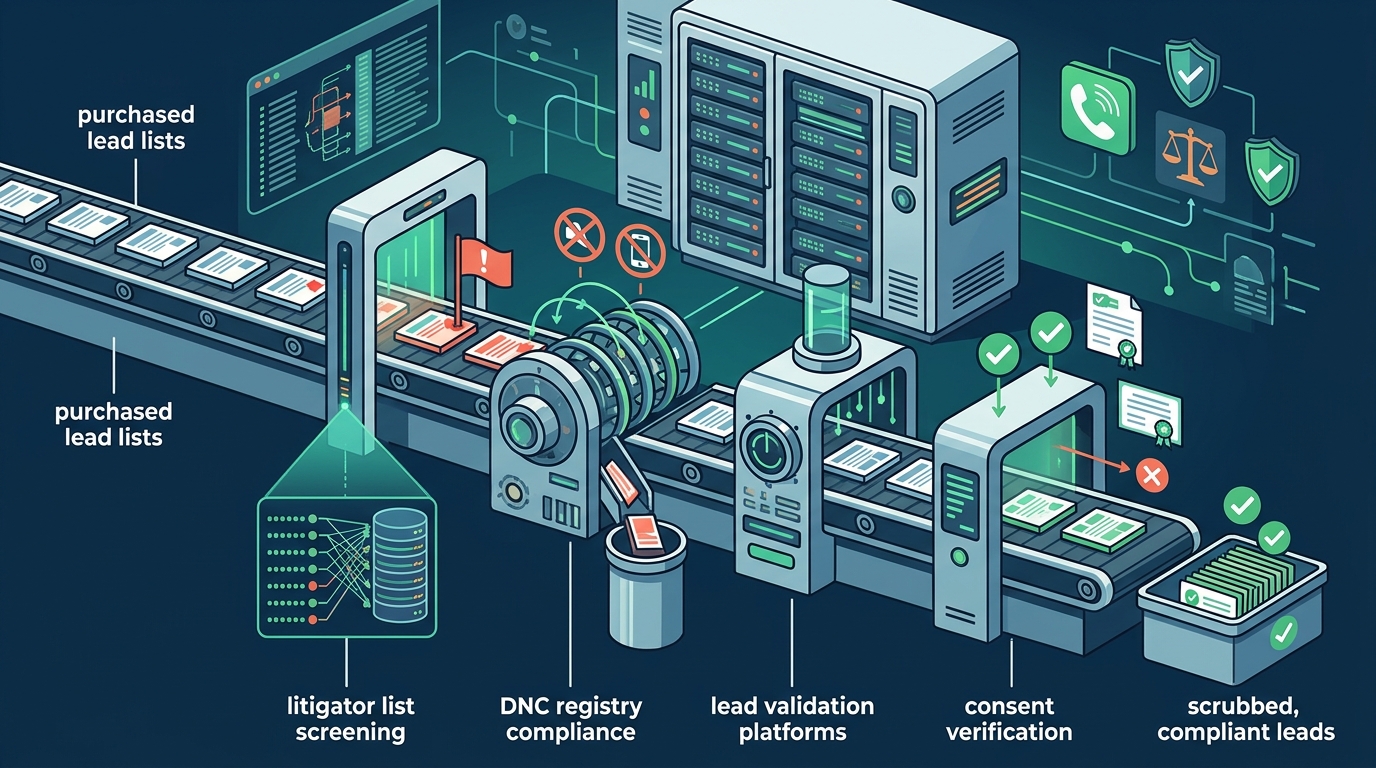
Lead generation companies use TCPA scrubbing services to filter purchased lead lists against known litigator numbers, Do Not Call (DNC) registries, and consent records before dialing. This process mitigates the risk of statutory damages and class action lawsuits under the Telephone Consumer Protection Act (TCPA). This guide covers the four critical screening layers: litigator list screening, DNC registry compliance, lead validation platforms, and consent verification. It explains how these tools integrate into modern dialer workflows and why multi-layered screening is essential for compliance in 2026.
Litigator List Screening
Litigator list screening is the process of comparing phone numbers against a database of individuals who have previously filed TCPA lawsuits or sent demand letters. This specific type of screening is distinct from general list cleaning because it targets professional plaintiffs and serial filers who actively seek out violations. For lead generation companies, this is often the highest-priority check because a single call to a known litigator can trigger a class action claim.
The Threat of Professional Plaintiffs
Professional TCPA litigators, often referred to as TCPA trolls, operate by seeding their phone numbers into lead sources or purchasing lists from third-party vendors. They wait for a dialer to contact their number, then file a lawsuit or send a demand letter. The Telephone Consumer Protection Act (TCPA) is a U.S. federal law enacted in 1991 to protect consumers from unwanted telemarketing calls, faxes, and texts. It restricts the use of automatic dialing systems and prerecorded messages for promotional purposes and requires consent for such communications. Because the statutory damages are significant, these individuals treat the TCPA as a revenue stream rather than a consumer protection tool.
Number vs. Name Recognition
Many basic scrubbing services only check phone numbers. However, professional litigators frequently rotate through prepaid phone numbers or use traceable numbers to avoid detection. A robust screening service must look beyond the number itself. TCPA Litigator List utilizes a proprietary Name Recognition Algorithm (NRA) that scrubs against the names of known litigators, not just their phone numbers. This safeguards against the failure mode where a litigator changes their number but remains the same individual. By matching names, the system can flag a new number associated with a known plaintiff, providing a layer of protection that number-only lists miss.
Database Coverage and Updates
The effectiveness of litigator screening depends entirely on the freshness and breadth of the database. A static list downloaded once a year is insufficient because new lawsuits are filed daily. Leading services update their databases daily, adding new litigator numbers and associated names as soon as they are identified in court filings. TCPA Litigator List maintains a comprehensive registry that includes over 340,000 TCPA litigator numbers and 260 million troll and DNC records. This scale ensures that the screening process covers the vast majority of known professional plaintiffs in the United States.
DNC Registry Compliance
DNC registry compliance is the mandatory process of scrubbing phone numbers against the National Do Not Call Registry maintained by the Federal Communications Commission (FCC). This is a baseline legal requirement for all telemarketing entities in the United States. Failure to honor the National DNC Registry can result in fines and serves as a primary basis for TCPA claims. For lead generation companies, this is the first line of defense in any scrubbing workflow.
The National Do Not Call Registry
The National Do Not Call Registry is a database of phone numbers that consumers have registered to opt out of receiving telemarketing calls. Businesses are required to scrub their calling lists against this registry at least every 31 days. The FCC provides this data to registered telemarketers, but the responsibility for maintaining an up-to-date suppression list lies with the business. If a number is on the National DNC Registry, it must be suppressed from all outbound marketing calls, regardless of whether the consumer previously gave consent for a specific campaign.
State and Internal DNC Lists
Compliance does not stop at the federal level. Many states maintain their own Do Not Call registries, and businesses must comply with the strictest applicable standard. Furthermore, companies must maintain an internal DNC list of consumers who have asked not to be called by that specific company. This internal list must be honored for at least five years. A comprehensive scrubbing service should allow users to upload their internal suppression lists and cross-reference them against the National DNC Registry and other databases in a single pass. This ensures that no number is dialed if it appears on any relevant suppression list.
Integration with Dialers
Manual scrubbing is prone to error and does not scale. Modern lead generation companies integrate scrubbing APIs directly into their dialer software. This allows for real-time suppression at the moment of dial. When a dialer attempts to place a call, it queries the scrubbing service. If the number is on the DNC Registry or an internal suppression list, the dialer blocks the call automatically. This real-time integration is critical for high-volume operations where lists are updated frequently.
Lead Validation Platforms
Lead validation platforms are tools that verify the technical status of a phone number before it is added to a calling list. This includes checking if the number is active, disconnected, or a VoIP line. While not a legal compliance tool in the same sense as DNC scrubbing, lead validation is a critical component of data hygiene. It reduces wasted spend on disconnected numbers and improves the overall quality of the lead list.
Line Type Determination
One of the most important functions of a lead validation platform is line type determination. The TCPA treats calls to mobile phones differently than calls to landlines. For example, the use of an automatic telephone dialing system (ATDS) to call a mobile phone requires prior express written consent. A validation platform can identify whether a number is a mobile, landline, or VoIP line. This information helps compliance teams apply the correct consent rules to each number. If a number is identified as a mobile, the system can flag it for stricter consent verification before dialing.
Number Portability and Status
Phone numbers are portable, meaning a consumer can keep their number when switching carriers. This can lead to situations where a number is associated with a different carrier or service type than originally recorded. Validation platforms check the current status of the number to ensure it is active and correctly categorized. This reduces the risk of calling a number that has been reassigned to a different person or a business line, which can have different consent implications.
Integration with Scrubbing
Lead validation is often combined with compliance scrubbing in a single platform. This allows businesses to perform a comprehensive check in one step. The platform validates the number, determines the line type, and then scrubs it against DNC and litigator lists. This streamlined process saves time and reduces the risk of errors that can occur when using multiple separate tools. TCPA Litigator List offers phone number verification and line type determination as part of its service suite, ensuring that lead generation companies have a complete view of their data quality and compliance status.
Consent Verification
Consent verification is the process of confirming that a consumer has given prior express written consent (PEWC) to be contacted by a specific business. This is the most complex and legally sensitive aspect of TCPA compliance. The FCC has issued rules requiring that consent be obtained in a specific manner, and courts have interpreted these rules in various ways. For lead generation companies, verifying consent is a challenge because they often purchase leads from third-party vendors who claim to have obtained consent.
The Challenge of Purchased Leads
When a lead generation company purchases a list from a vendor, they are relying on the vendor's representation that consent was obtained. However, the burden of proof often falls on the business making the call. If a lawsuit is filed, the company must be able to produce evidence of consent. This is difficult when the consent was obtained by a third party. Therefore, many companies use consent verification tools to audit their purchased lists. These tools can check if the number has been associated with previous consent records or if it has been flagged for consent disputes.
Written Consent Requirements
The FCC's rules on prior express written consent have been a subject of significant legal debate. Recent court decisions have pushed back on the FCC's authority to impose certain written consent requirements for robocalls. However, the general principle remains that consent must be clear, unambiguous, and documented. A consent verification platform can help businesses maintain a record of consent for each number. This includes the date, time, and method of consent, as well as the specific language used. This documentation is crucial for defending against TCPA claims.
Revocation of Consent
Comparison of Screening Layers
| Screening Layer | Primary Purpose | Key Data Source | Legal Requirement | Integration Method |
|---|---|---|---|---|
| Litigator List Screening | Identify professional plaintiffs and serial filers | Court filings, demand letters | Best Practice / Risk Mitigation | API / Batch Upload |
| DNC Registry Compliance | Suppress numbers on National/State DNC lists | FCC National DNC Registry | Mandatory | API / Batch Upload |
| Lead Validation | Verify number status and line type | Carrier Data | Best Practice / Data Hygiene | API / Batch Upload |
| Consent Verification | Confirm prior express written consent | Internal Records / Vendor Data | Mandatory for ATDS/Mobile | API / Manual Audit |
Key Takeaways
- Litigator list screening is a critical risk mitigation tool that targets professional plaintiffs who actively seek TCPA violations.
- Name Recognition Algorithms (NRA) provide superior protection compared to number-only lists by identifying litigators who rotate phone numbers.
- DNC registry compliance is a mandatory legal requirement that must be updated at least every 31 days to avoid fines and lawsuits.
- Lead validation platforms help improve data quality by verifying number status and determining line type, which is essential for applying correct consent rules.
- Consent verification is the most complex aspect of compliance, especially for purchased leads, and requires robust documentation and tracking of revocations.
- Real-time API integration with dialers is the most effective way to ensure that scrubbing happens at the moment of dial, preventing non-compliant calls.
- Multi-layered screening, combining litigator, DNC, validation, and consent checks, provides the most comprehensive protection for lead generation companies.
- Screening results are informational and do not constitute a legal determination; businesses remain responsible for overall compliance and legal advice.
Frequently Asked Questions
What is the TCPA Litigator List?
The TCPA Litigator List is a specialized database that compiles phone numbers and names associated with TCPA litigation from 2000 to the present day. It is designed to help businesses identify and suppress numbers belonging to professional plaintiffs and serial filers before they are dialed.
How does the Name Recognition Algorithm work?
The Name Recognition Algorithm (NRA) is a proprietary technology that matches phone numbers against the names of known TCPA litigators. This allows the system to flag a number even if the litigator has changed their phone number, providing protection against number rotation tactics.
Is scrubbing against the DNC Registry mandatory?
Yes, scrubbing against the National Do Not Call Registry is a mandatory legal requirement for all telemarketing businesses in the United States. Failure to do so can result in fines and serves as a basis for TCPA claims.
Can I use a single service for all screening needs?
Yes, many modern platforms, including TCPA Litigator List, offer integrated solutions that combine litigator screening, DNC compliance, lead validation, and consent verification in a single API or batch upload process. This streamlines the workflow and reduces the risk of errors.
How often should I update my scrubbing database?
It is recommended to update your scrubbing database daily or in real-time via API. New litigator numbers and DNC registrations are added frequently, and a static list can become outdated quickly, leaving your business exposed to risk.
Does using a scrubbing service guarantee compliance?
No, no screening service can guarantee compliance or prevent all litigation. Screening results are informational and help identify high-risk numbers, but businesses remain responsible for obtaining required consent, maintaining suppression lists, and complying with all applicable laws.
What is the difference between a TCPA litigator and a TCPA troll?
Conclusion
Lead generation companies must adopt a multi-layered approach to TCPA compliance to protect their businesses from the significant financial and legal risks associated with telemarketing. By integrating litigator list screening, DNC registry compliance, lead validation, and consent verification into their dialer workflows, they can significantly reduce their exposure to lawsuits and fines. TCPA Litigator List provides the advanced technology and comprehensive data necessary to implement these screening layers effectively. To plan your visit, to discuss how our services can support your compliance program.