

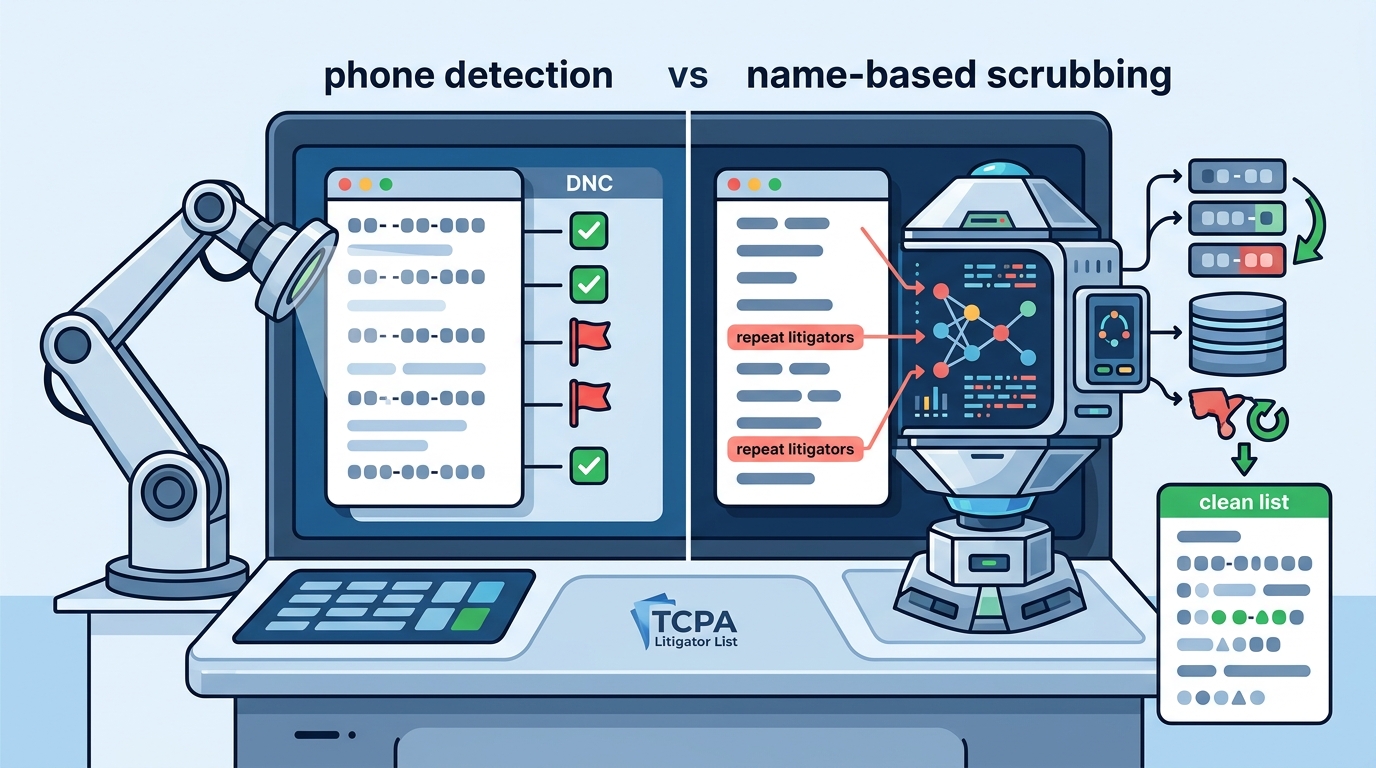
Choosing between name-based scrubbing and phone detection depends on your specific risk profile. Name-based scrubbing is superior for catching serial litigators who rotate prepaid numbers, while phone detection is essential for standard compliance and Do Not Call registry checks. TCPA Litigator List integrates both methods to provide a comprehensive defense against litigation risk. This dual approach ensures that your calling lists remain clean regardless of how a plaintiff attempts to contact you.
Understanding the Two Detection Methods
Phone detection is the process of matching a phone number against a database of known litigators, Do Not Call registry entries, and previous complaint records. This method relies on the specific digits of the phone number. It is highly effective for identifying numbers that have been used in past lawsuits or registered on the National Do Not Call Registry. However, it has a critical limitation: it only works if the number is already in the database.
Name-based scrubbing is a technique that matches the name associated with a phone number against a registry of known TCPA litigators and demand letter senders. This method is particularly powerful because it identifies the individual, not just the number. If a serial litigator changes their phone number, a name-based system can still flag the new number if the name matches a known plaintiff. This is a crucial distinction for businesses dealing with professional plaintiffs who use disposable or prepaid phones.
Phone Detection: Strengths and Limitations
Phone detection is the foundation of most compliance programs. It allows you to scrub your lists against the Federal Do Not Call Registry and state-specific DNC lists. This method is straightforward and widely understood. It is ideal for general compliance and reducing the volume of unwanted calls to numbers that have explicitly opted out. The primary strength of phone detection is its ability to handle large volumes of data quickly.
However, phone detection has significant limits when it comes to repeat litigators. Many professional TCPA plaintiffs use prepaid phones or unregistered numbers. These numbers often do not appear in standard databases until after a lawsuit is filed. By the time a number is added to a phone-based suppression list, the damage may already be done. Phone detection is reactive in this context. It relies on historical data of specific numbers, which can be easily bypassed by individuals who rotate their phone lines.
Name-Based Scrubbing: The Advantage Against Serial Filers
Name-based scrubbing addresses the gap left by phone detection. It uses a proprietary algorithm to match names in your calling list against a database of known litigators. This is particularly effective for identifying individuals who have filed multiple TCPA lawsuits or sent demand letters. The TCPA Litigator List utilizes a Name Recognition Algorithm (NRA) to perform this function. This technology allows the system to flag a number if the name associated with it matches a known plaintiff, even if the phone number itself is new or unregistered.
The strength of name-based scrubbing lies in its ability to catch the person, not just the phone. This is critical in the current legal landscape where serial filers often use multiple phone numbers. By focusing on the name, you can identify high-risk individuals before they initiate a lawsuit. This proactive approach can save your business from significant legal fees and settlement costs. It is a more robust defense against the specific threat of professional TCPA litigators.
Comparison of Detection Methods
| Criteria | Phone Detection | Name-Based Scrubbing |
|---|---|---|
| Primary Target | Specific phone numbers | Individuals associated with numbers |
| Effectiveness Against Prepaid Phones | Low (unless number is already flagged) | High (matches name regardless of number) |
| Do Not Call Compliance | Essential | Supplementary |
| Data Requirement | Phone number only | Phone number and name |
| Best For | General compliance and DNC checks | Catching serial litigators and trolls |
Choosing the Right Method for Your Business
Choose phone detection if your primary concern is general TCPA compliance and Do Not Call registry adherence. This method is sufficient for most businesses that do not face frequent litigation from professional plaintiffs. It is a standard requirement for any telemarketing operation. If your lead lists are clean and you do not have a history of TCPA lawsuits, phone detection may be all you need.
Choose name-based scrubbing if you have been targeted by serial TCPA litigators or if you operate in a high-risk industry. This method is essential for businesses that want to proactively identify and suppress numbers associated with known plaintiffs. It is particularly useful if you suspect that your leads may include individuals who use prepaid or unregistered phones. TCPA Litigator List recommends combining both methods for the highest level of protection.
Frequently Asked Questions
Can name-based scrubbing catch litigators who use unregistered phones?
Yes, name-based scrubbing is specifically designed to catch individuals who use unregistered or prepaid phones. By matching the name associated with the number against a database of known litigators, the system can flag the number even if the phone number itself is not in a traditional suppression list. This is a key advantage over phone-only detection methods.
Do I need to provide names in my calling list for name-based scrubbing?
Yes, name-based scrubbing requires both the phone number and the name associated with that number. If your lead list does not include names, you will not be able to use this method effectively. Ensure that your data collection processes capture full names to maximize the utility of name-based scrubbing.
Is phone detection still necessary if I use name-based scrubbing?
How often are the databases updated?
Databases for both phone and name-based scrubbing should be updated regularly to include new litigators and Do Not Call entries. TCPA Litigator List updates its database daily to ensure that you have access to the most current information. Regular updates are critical for maintaining the effectiveness of your compliance program.
What is the cost difference between the two methods?
The cost of name-based scrubbing is typically higher than phone detection due to the complexity of the matching algorithm. However, the cost of a single TCPA lawsuit can far exceed the cost of advanced scrubbing services. Investing in name-based scrubbing can be a cost-effective way to mitigate legal risk.
Conclusion
Both name-based scrubbing and phone detection play vital roles in TCPA compliance. Phone detection is essential for general compliance and Do Not Call checks, while name-based scrubbing provides a critical defense against serial litigators who use rotating or prepaid phones. By using a service that integrates both methods, you can create a robust compliance program that protects your business from litigation risk. TCPA Litigator List offers advanced tools to help you identify and suppress high-risk numbers and names. To learn more about how our services can protect your business, .