
Yes, you must check the Do Not Call (DNC) registry before launching any telemarketing campaign. The Federal Trade Commission (FTC) mandates that businesses scrub their calling lists against the National DNC Registry to avoid significant statutory penalties. Failure to perform this check exposes your organization to fines and legal liability under the Telephone Consumer Protection Act (TCPA). TCPA Litigator List provides the infrastructure to manage this critical compliance step effectively.
The Legal Mandate for Registry Scrubbing
The National Do Not Call Registry is a federal database maintained by the FTC. It is a legal requirement for telemarketers to consult this registry before placing calls. The FTC updates the registry every three months, meaning your data must be current to remain compliant. Ignoring these updates is a direct violation of federal law. The cost of non-compliance is high, with penalties reaching thousands of dollars per violation.
Businesses often assume that having a clean list from a previous quarter is sufficient. This is a dangerous misconception. The registry changes frequently as consumers opt out. A number that was clean in January may be registered by March. TCPA Litigator List emphasizes the need for continuous data hygiene to keep pace with these regulatory updates. Your compliance program must reflect the current state of the registry, not a historical snapshot.
Statutory Penalties and Financial Risk
Violations of the DNC rules carry severe financial consequences. The FTC can impose civil penalties for each call made to a registered number. These fines accumulate rapidly in large-scale campaigns. A single campaign with thousands of leads can result in a six-figure liability if the list is not properly scrubbed. This financial risk is avoidable with basic due diligence.
Beyond direct fines, non-compliance triggers legal scrutiny. Plaintiffs often use DNC violations as evidence of broader TCPA non-compliance. This can lead to class-action lawsuits and increased regulatory attention. The legal fees associated with defending these claims often exceed the cost of the initial scrubbing. Protecting your bottom line requires proactive risk mitigation. TCPA Litigator List helps businesses quantify and reduce this exposure before it becomes a legal crisis.
Integration with TCPA Litigation Risk
Checking the DNC list is only one layer of compliance. You must also consider the risk of serial TCPA litigators. These individuals often seed their numbers into lead sources to trigger lawsuits. A number may be clean on the federal DNC registry but still belong to a known plaintiff. This creates a blind spot in standard compliance checks.
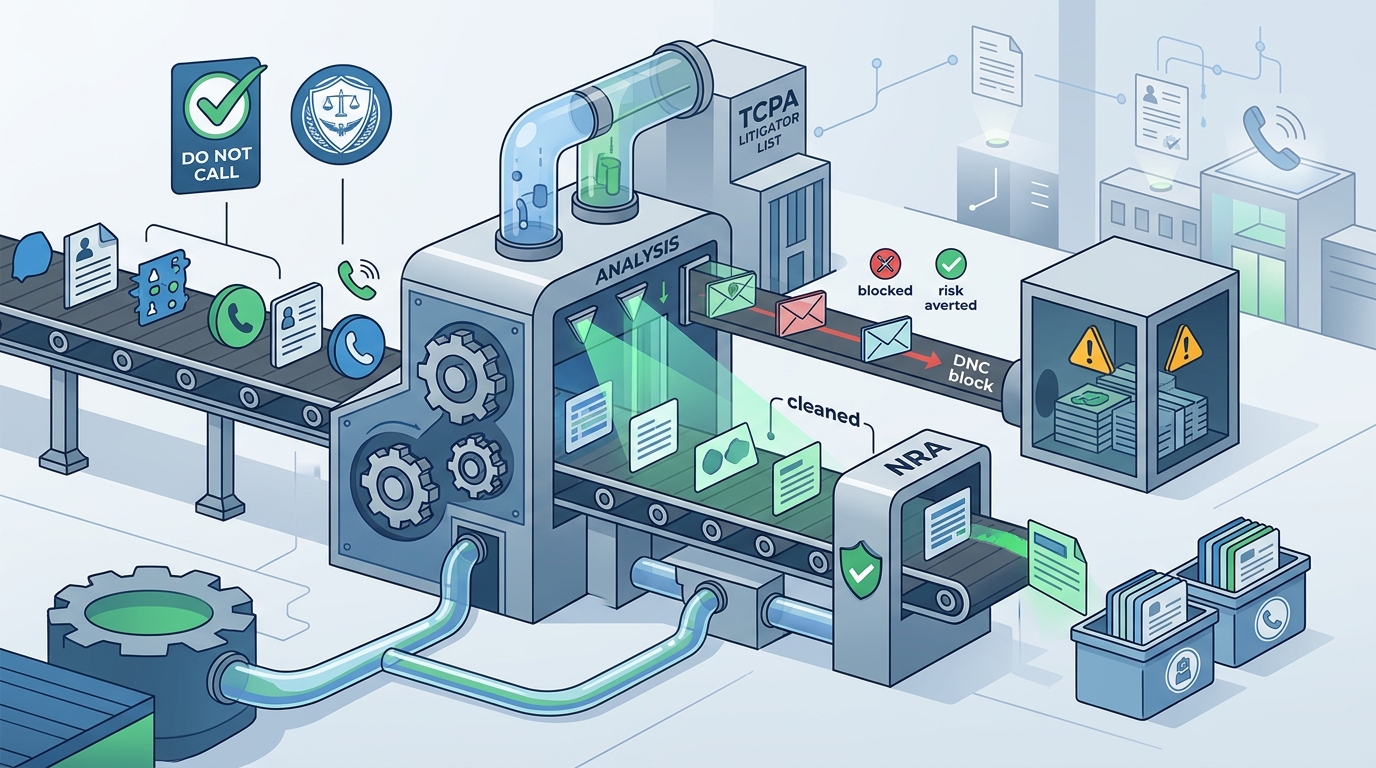
Advanced screening goes beyond the federal registry. It involves cross-referencing numbers against databases of known litigators and demand letter senders. This multi-layered approach provides a more accurate risk profile. TCPA Litigator List utilizes a proprietary Name Recognition Algorithm to identify these high-risk entities. By combining DNC scrubbing with litigator screening, you build a more robust defense against legal threats.
Operational Best Practices for Data Hygiene
Effective DNC checking requires a systematic approach to data management. You should scrub your lists immediately before dialing, not just at the start of a campaign. Real-time scrubbing ensures that any last-minute changes in the registry are captured. This reduces the window of vulnerability for your outbound calls.
Implementing automated workflows is essential for scale. Manual scrubbing is error-prone and too slow for modern dialers. API integration allows for instant verification of each number before the call is placed. This automation ensures consistency and reduces human error. TCPA Litigator List offers API solutions that integrate directly into your dialing infrastructure. This seamless integration supports high-volume operations without compromising compliance.
Key Takeaways
- Checking the National DNC Registry is a federal legal requirement for all telemarketers.
- The registry updates every three months, necessitating frequent list scrubbing.
- Statutory penalties for DNC violations can reach thousands of dollars per call.
- Federal DNC compliance does not protect against serial TCPA litigators.
- Real-time API scrubbing is the most effective method for large-scale campaigns.
- Combining DNC checks with litigator screening provides comprehensive risk mitigation.
Frequently Asked Questions
How often must I check the DNC list?
You should scrub your lists against the National DNC Registry at least every three months. However, for active campaigns, real-time or daily scrubbing is recommended to capture the most recent updates.
Does checking the DNC list guarantee TCPA compliance?
No. DNC compliance is one component of TCPA compliance. You must also obtain proper consent, honor internal opt-outs, and manage litigator risk to be fully compliant.
What is the difference between the DNC registry and a suppression list?
The DNC registry is a federal database of consumers who have opted out of telemarketing. A suppression list is an internal database of customers who have asked your specific company not to contact them.
Can I call numbers on the DNC list if I have prior consent?
Yes, if you have a valid established business relationship or prior express written consent, you may call numbers on the DNC registry. However, you must still honor any internal opt-out requests.
How does TCPA Litigator List assist with DNC checking?
TCPA Litigator List provides tools to scrub numbers against the federal DNC registry as well as its proprietary database of known litigators, offering a dual-layer compliance check.
Conclusion
Checking the Do Not Call list is not optional; it is a foundational element of legal telemarketing. Neglecting this step invites significant financial penalties and legal exposure. By integrating rigorous DNC scrubbing with broader litigation risk management, you protect your business and your reputation. TCPA Litigator List provides the specialized tools and data intelligence needed to navigate this complex regulatory landscape. To ensure your next campaign is compliant and secure, to discuss your specific screening needs.