
Lead generation companies verify customer consent by documenting the source, timestamp, and specific scope of authorization before dialing. This process involves cross-referencing lead data against internal suppression lists and external compliance databases. TCPA Litigator List provides the infrastructure to identify high-risk numbers that may lack valid consent or belong to professional litigators, ensuring your dialing operations remain defensible in a shifting legal landscape.
The Legal Definition of Valid Consent
Understanding the baseline legal requirements is the first step in building a compliant dialing strategy. The Telephone Consumer Protection Act (TCPA) is a U.S. federal law enacted in 1991 to protect consumers from unwanted telemarketing calls, faxes, and texts. It restricts the use of automatic dialing systems and prerecorded messages for promotional purposes and requires consent for such communications. For lead generation firms, the distinction between oral and written consent is critical. While the statute requires prior express consent, the Federal Communications Commission (FCC) has historically interpreted this to mean prior express written consent (PEWC) for robocalls and prerecorded messages to mobile numbers.
Recent judicial developments have complicated this framework. Courts are increasingly rejecting the FCC's added written requirement as beyond its authority, returning to the plain language of the statute which does not distinguish between oral and written consent. This creates a fragmented legal environment where different courts may apply different standards. To navigate this, companies must document the exact nature of the consent obtained. If a lead was generated through a web form, the digital signature or click-through agreement serves as the primary evidence. If consent was given verbally, recording the call or logging the agent's notes becomes essential. Without this documentation, a single disputed call can trigger a class action lawsuit.
Documenting the Source and Scope of Authorization
Consent is not a blanket permission to call a number indefinitely. It is specific to the context in which it was given. A customer who opts in to receive information about car insurance has not consented to be called about credit cards. Lead generation companies must map the scope of consent to the specific campaign. This involves tagging leads with metadata that includes the date of consent, the method of collection, and the specific products or services authorized. When a lead is purchased from a third-party vendor, the burden of proof shifts. The buyer must verify that the vendor obtained valid consent and that the lead has not been previously suppressed by the consumer.
Failure to verify the scope of consent is a primary driver of TCPA litigation. In 2019, Janet Oh closed her Allstate Insurance Agency over two phone calls, illustrating the severe financial and operational impact of a single compliance failure. To mitigate this, companies should implement a consent lifecycle management system. This system tracks when consent was obtained, when it was last renewed, and when it expires. If a consumer has not interacted with the brand in a certain period, the consent may be considered stale. Regularly auditing these records ensures that your dialing lists reflect current, valid authorizations rather than outdated data.
Screening Against Litigator and Troll Databases
Even with valid consent documentation, lead generation companies face the threat of professional TCPA litigators and trolls. A TCPA litigator is an individual who has filed lawsuits against businesses for alleged violations, often using multiple phone numbers to maximize damages. A TCPA troll is an individual who sends demand letters but has never sued, seeking settlement payments without the cost of litigation. These actors seed their numbers into lead sources on purpose, then wait for the dial. Standard phone scrubbing services often fail to identify these individuals because they only check the number, not the person behind it.
Advanced screening requires a Name Recognition Algorithm (NRA) that matches the name on the lead against a database of known litigators and trolls. TCPA Litigator List utilizes a proprietary NRA to scrub against TCPA litigators' names, safeguarding against litigators using trac phone numbers for legal actions. This technology is crucial because serial filers rotate to new prepaid lines, but their names remain constant. By integrating this screening into your dialer, you can flag high-risk numbers before the call is placed. This proactive approach prevents the exposure that leads to settlements and legal fees, which can cost your company tens of thousands of dollars.
Implementing Real-Time API Integration
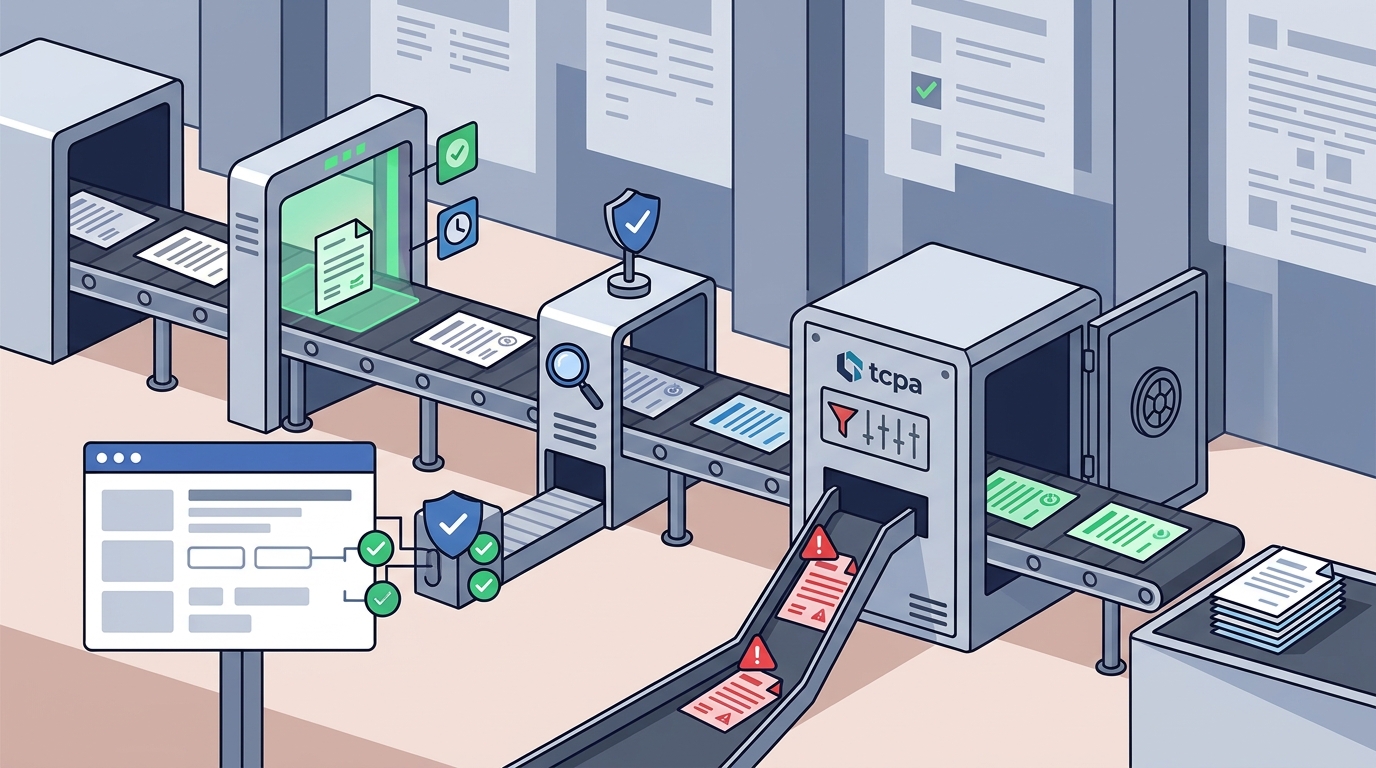
Manual list scrubbing is insufficient for high-volume lead generation operations. The volume of calls and the speed at which data changes require real-time verification. An Application Programming Interface (API) is a software intermediary that allows two applications to talk to each other. In the context of TCPA compliance, an API allows your dialer to query a suppression database in milliseconds before placing a call. This ensures that the number being dialed is not on the National Do Not Call Registry, your internal suppression list, or a litigator database.
For enterprise-level operations, throughput and tenancy are critical factors. Standard plans often share rate limits, which can bottleneck your dialing capacity during peak hours. Enterprise solutions offer dedicated API infrastructure with no shared ceiling, sized to your peak dial rate. They also provide sub-account isolation per brand or client, with isolated keys and reporting. This isolation is vital for lead generation companies that manage multiple client accounts, as it prevents cross-contamination of suppression lists and ensures that each client's data remains secure and compliant. The ability to produce timestamped, retained scrub records is also essential for proving compliance in discovery or a regulatory exam.
Building a Defensible Compliance Program
Consent verification is not a one-time task but an ongoing process that requires continuous monitoring and adaptation. A defensible compliance program includes regular training for employees, clear policies for consent management, and robust technology for screening and documentation. Employees must be well-educated about their compliance responsibilities before making any contact with the customers. Training sessions must be conducted regularly to ensure that agents understand the nuances of consent and the importance of honoring opt-out requests.
Additionally, companies should maintain a centralized Do Not Contact list of those requests, along with the date requests were made. The DNC list should be honored for 5 years, as required by the TCPA. This list must be integrated into your dialing system to prevent accidental calls to suppressed numbers. By combining human oversight with automated screening, lead generation companies can build a compliance program that withstands legal scrutiny. This holistic approach not only protects against litigation but also enhances customer trust and brand reputation.
Key Takeaways
- Consent is specific to the context in which it was given and must be documented with source, timestamp, and scope.
- Recent court rulings have created a fragmented legal environment regarding the requirement for written versus oral consent.
- Professional TCPA litigators and trolls seed their numbers into lead sources, requiring name-based screening rather than just number-based checks.
- Real-time API integration is essential for high-volume dialing operations to ensure immediate suppression of high-risk numbers.
- Enterprise solutions offer dedicated infrastructure and sub-account isolation, which are critical for multi-client lead generation firms.
- A defensible compliance program includes regular employee training, centralized suppression lists, and continuous monitoring of legal developments.
Frequently Asked Questions
What is the difference between a TCPA litigator and a TCPA troll?
A TCPA litigator is an individual who has filed lawsuits against businesses for alleged TCPA violations. A TCPA troll is an individual who sends demand letters seeking settlement payments but has never actually filed a lawsuit. Both pose a risk to lead generation companies, but trolls are often harder to identify because they do not appear in court records.
How often should I update my suppression lists?
Suppression lists should be updated in real-time or at least daily. The TCPA Litigator List updates its database daily, adding new litigator numbers and troll records. Using a static list that is weeks or months old leaves you vulnerable to new threats and outdated data.
Does scrubbing my list guarantee TCPA compliance?
No, scrubbing your list does not guarantee TCPA compliance. Screening results are informational and do not constitute a legal determination that a telephone number may or may not be contacted. Customers remain responsible for obtaining required consent, maintaining appropriate suppression lists, and complying with applicable laws and regulations.
What is a Name Recognition Algorithm (NRA)?
A Name Recognition Algorithm (NRA) is a proprietary technology that matches the name on a lead against a database of known TCPA litigators and trolls. This allows the system to flag high-risk individuals even if they are using a new or different phone number than the one previously associated with them.
How can I verify consent for purchased leads?
To verify consent for purchased leads, you must request documentation from the vendor proving that valid consent was obtained. This includes the date, method, and scope of consent. You should also scrub the leads against your internal suppression list and external compliance databases before dialing.
What are the penalties for TCPA violations?
Statutory damages for TCPA violations range from $500 to $1,500 per call or text. Willful violations can result in damages of $1,500 to $4,500 each, with no cap on class size. In addition to statutory damages, businesses may face legal fees and settlement costs that can reach tens of thousands of dollars.
Conclusion
Verifying customer consent is a critical component of TCPA compliance for lead generation companies. By documenting the source and scope of consent, screening against litigator and troll databases, and implementing real-time API integration, you can mitigate legal risks and protect your business. TCPA Litigator List offers the tools and expertise to help you build a defensible compliance program. To plan your visit, contact our team for a free risk audit of your list. Learn more: Contact TCPA Litigator DNC.