

The best integration point for connecting your dialer system to litigator screening is the pre-dial API endpoint. This placement allows real-time validation of phone numbers before the call is initiated. By intercepting the dial sequence, businesses can suppress high-risk contacts instantly. This approach minimizes legal exposure and protects revenue from wasted dial attempts.
The Pre-Dial Interception Model
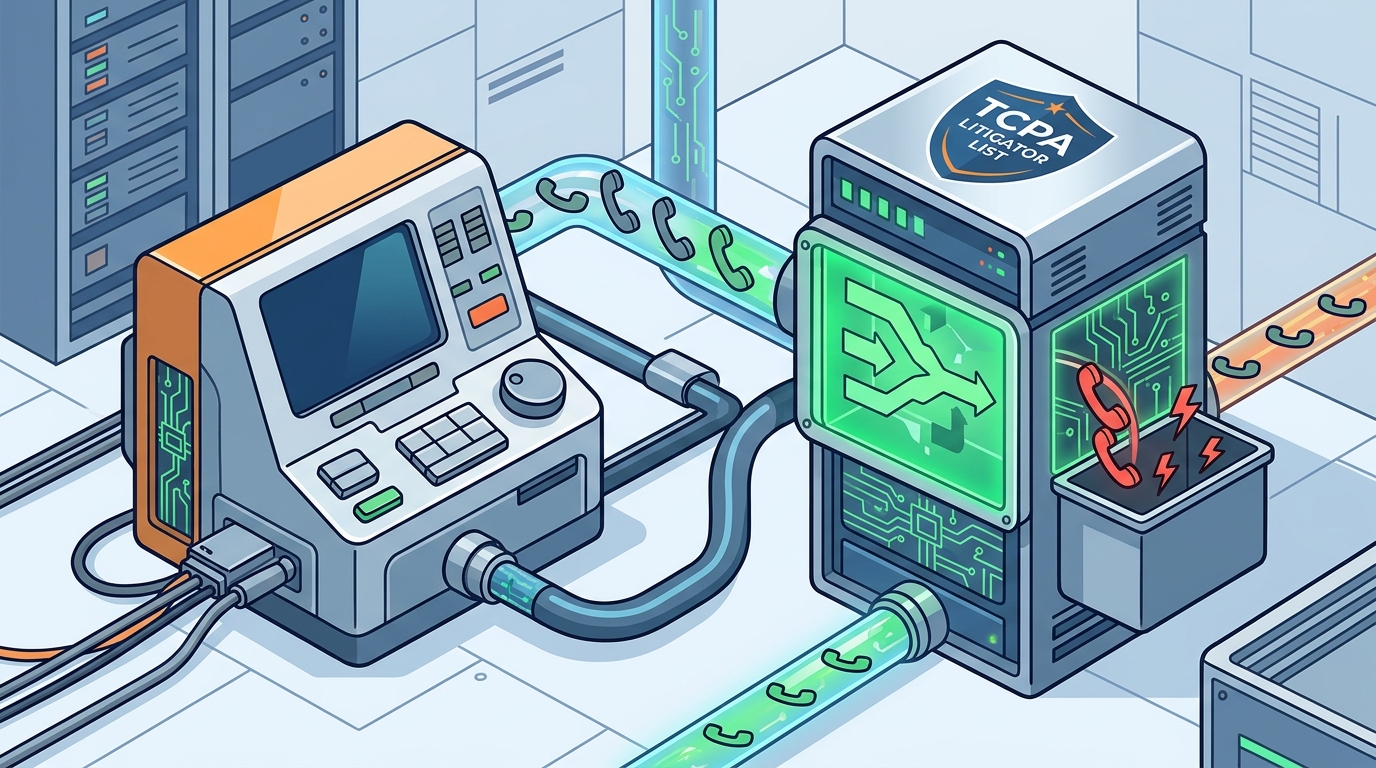
The most effective integration point is the moment immediately before the dialer initiates a call. This is often referred to as the pre-dial hook or pre-dial API call. In this model, the dialer sends the phone number and contact name to the screening service. The service returns a boolean result indicating whether the number is flagged. If the number is flagged, the dialer skips the call and moves to the next record. This prevents the call from ever being placed.
Pre-dial interception is superior to post-dial analysis because it stops the violation before it happens. Post-dial analysis only identifies problems after the fact, which is too late to prevent statutory damages. The pre-dial model requires low latency to avoid slowing down the dialing process. High-performance APIs can return results in single-digit milliseconds. This speed ensures that the dialer maintains its expected connect rates.
For example, a dialer configured for 50 calls per minute can handle a 10-millisecond API response without noticeable delay. This allows for continuous, real-time screening without impacting agent productivity. The key is to ensure the API endpoint is optimized for high throughput and low latency.
Batch Scrubbing for List Hygiene
While pre-dial interception handles real-time risk, batch scrubbing is the best integration point for initial list hygiene. Before a campaign launches, businesses should upload their entire calling list to a batch screening service. This process identifies and removes all flagged numbers from the list. It also removes duplicates and invalid numbers. This ensures that the dialer only receives clean, compliant data.
Batch scrubbing is ideal for large datasets that are not being dialed in real-time. It is also useful for periodic maintenance of existing databases. By regularly scrubbing your master database, you can remove numbers that have become flagged over time. This proactive approach reduces the volume of data that needs to be checked in real-time. It also helps to identify trends in your data quality.
For instance, a company with a database of one million records can batch scrub the entire list in minutes. This process can be automated to run weekly or monthly. The results can be used to update the master database and flag specific segments for review. Batch scrubbing complements real-time screening by maintaining the overall health of the data.
Database Endpoint Integration
Another critical integration point is the database endpoint. This involves connecting the screening service directly to your CRM or dialer database. In this model, the screening service queries the database for new or updated records. It then flags any records that match known litigator numbers. This approach ensures that new data is screened before it enters the dialing queue.
Database endpoint integration is particularly useful for organizations that use multiple data sources. It allows for centralized screening of all incoming data. This prevents unscrubbed data from being imported into the dialer. It also provides a single source of truth for compliance status. By integrating at the database level, you can ensure that all downstream systems receive clean data.
For example, a marketing automation platform can be configured to screen new leads as they are added to the CRM. This ensures that no lead is ever assigned to an agent without being screened. This integration point is essential for organizations with complex data pipelines. It provides a robust layer of protection against data contamination.
Webhook and Event-Driven Updates
Webhooks provide an event-driven integration point for real-time updates. In this model, the screening service sends a notification to your system when a number is added to the litigator list. Your system can then update the status of that number in your database. This ensures that your suppression list is always current. It also allows for immediate action when a new risk is identified.
Webhook integration is ideal for organizations that need to maintain a dynamic suppression list. It allows for automated updates without manual intervention. This is particularly useful for high-volume operations where manual updates are impractical. By using webhooks, you can ensure that your compliance program is always up to date with the latest litigation data.
For instance, a webhook can trigger an automated process to remove a flagged number from all active campaigns. This ensures that the number is not dialed in any context. This event-driven approach provides a high level of automation and efficiency. It reduces the risk of human error in managing suppression lists.
Key Takeaways
- Pre-dial API is the best point for real-time, high-speed screening.
- Batch Scrubbing is essential for initial list hygiene and periodic maintenance.
- Database Endpoints ensure that new data is screened before entering the dialer.
- Webhooks enable automated, event-driven updates to suppression lists.
- Low latency is critical for pre-dial integration to maintain dialer performance.
- Combining multiple integration points provides the most comprehensive protection.
Frequently Asked Questions
What is the fastest way to integrate litigator screening into a dialer?
The fastest way is to use a pre-dial API endpoint. This allows for real-time screening with minimal latency. It requires a simple API call before each dial attempt.
Can I use batch scrubbing for real-time dialing?
How do webhooks help with compliance?
Webhooks provide real-time updates when new numbers are flagged. This allows for automated updates to your suppression list. It ensures that your data is always current.
What is the difference between pre-dial and post-dial screening?
Pre-dial screening happens before the call is placed. Post-dial screening happens after the call. Pre-dial is preferred because it prevents the violation from occurring.
Do I need to integrate at the database level?
It is recommended for organizations with complex data pipelines. Database integration ensures that all new data is screened before it enters the dialer. It provides a centralized compliance layer.